
Multi-location SEO audit
What this page covers
Multi-location SEO audit
A multi-location SEO audit helps franchise, clinic, retail, and service brands understand why some locations show up strongly in search while others are hard to find.
Radar supports the audit by scanning public site structure, local hubs, location pages, internal links, sitemaps, robots rules, and access issues that can affect discovery.
In brief
- Use the audit to compare location pages, hubs, and leaf pages in one structural view instead of relying on scattered tools and spreadsheets.
- Look for uneven coverage across the location network, especially when a few flagship branches are visible while long-tail locations are overlooked.
- Prioritize structural checks first: local hubs, location pages, internal links, sitemap coverage, robots rules, and conflicts with directories or third-party profiles.
What to do
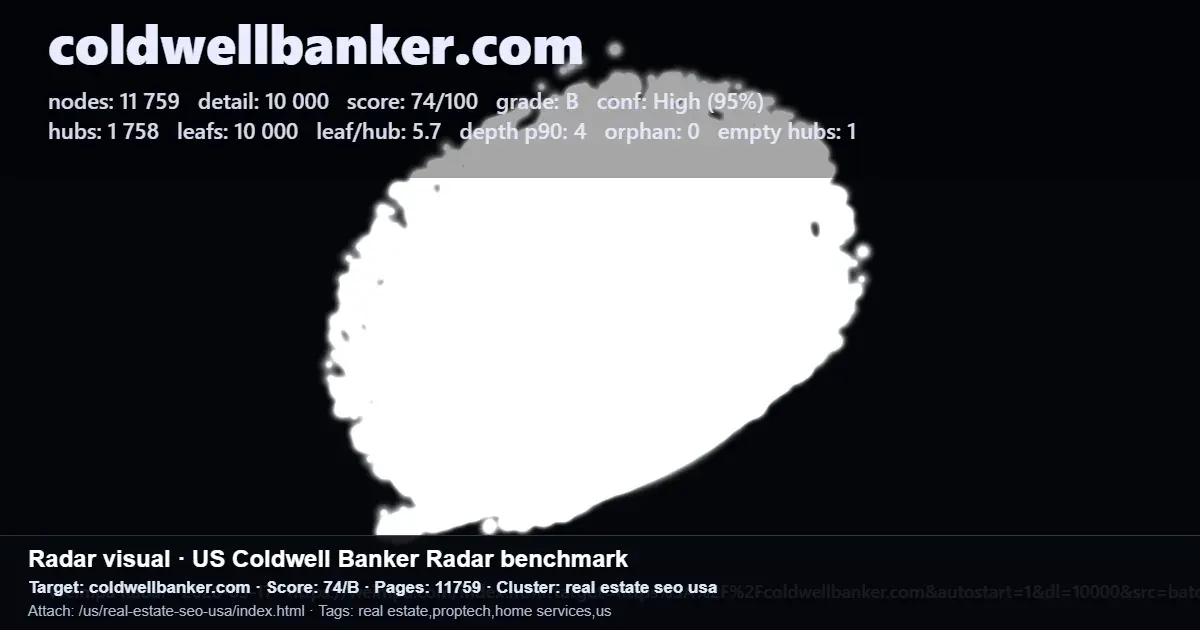
Start with the structure behind visibility. Radar benchmark data can show page counts, hub counts, leaf pages, leaf-to-hub patterns, crawl depth, and an overall score, so the audit does not stop at keyword checks alone.
For multi-location SEO, the key question is whether every important location has a clear place in the site architecture. The audit should check whether local hubs and location pages are reachable, consistently linked, and not blocked by crawl or access rules.
The output should help teams decide which hubs, locations, or categories to investigate first. This is useful for central marketing teams and agencies that need a repeatable way to explain complex site-structure issues.
What to keep in mind
This page is most relevant for US brands with many locations, including franchise networks, clinic groups, retailers, and service businesses where visibility can vary sharply by city or branch.
It is also useful for SEO teams whose audit process is fragmented across multiple tools and spreadsheets. Radar acts as a diagnostic layer for comparing structural health across multi-location, SaaS, and marketplace sites.
A structural audit does not prove rankings or revenue by itself. It gives teams a clearer view of hubs, leaf pages, depth, indexing access, and linking patterns, so they can plan the next investigation with more confidence.