
Website indexing and sitemap check
What this page covers
Website indexing and sitemap check
Check whether robots.txt, sitemaps, and other discovery files help search systems find and crawl the pages that matter.
Use the review to align discovery files with your current site structure, including hubs, leaf pages, related pages, and key conversion paths.
In brief
- Confirm that robots.txt, sitemaps, and related discovery files are not blocking or confusing access to important site sections.
- Compare sitemap structure with the live content model so hubs, leaf pages, and key paths are represented clearly.
- Look for common issues such as outdated sitemap entries, incomplete coverage, unclear ownership across multiple sitemaps, or weak internal linking signals.
What to do
Start with crawl discovery. Review robots.txt, sitemap locations, and related files to confirm they point search systems toward the sections that should be crawled. If important areas are blocked, missing, or hard to interpret, indexing coverage can be limited before content quality is even evaluated.
Then connect the sitemap view to the site architecture. Strong hub-and-leaf structures use clear relationships: hubs orient users and crawlers, leaf pages answer distinct sub-intents, and internal links connect leaves back to hubs and relevant neighboring pages. Descriptive anchor text helps clarify those relationships.
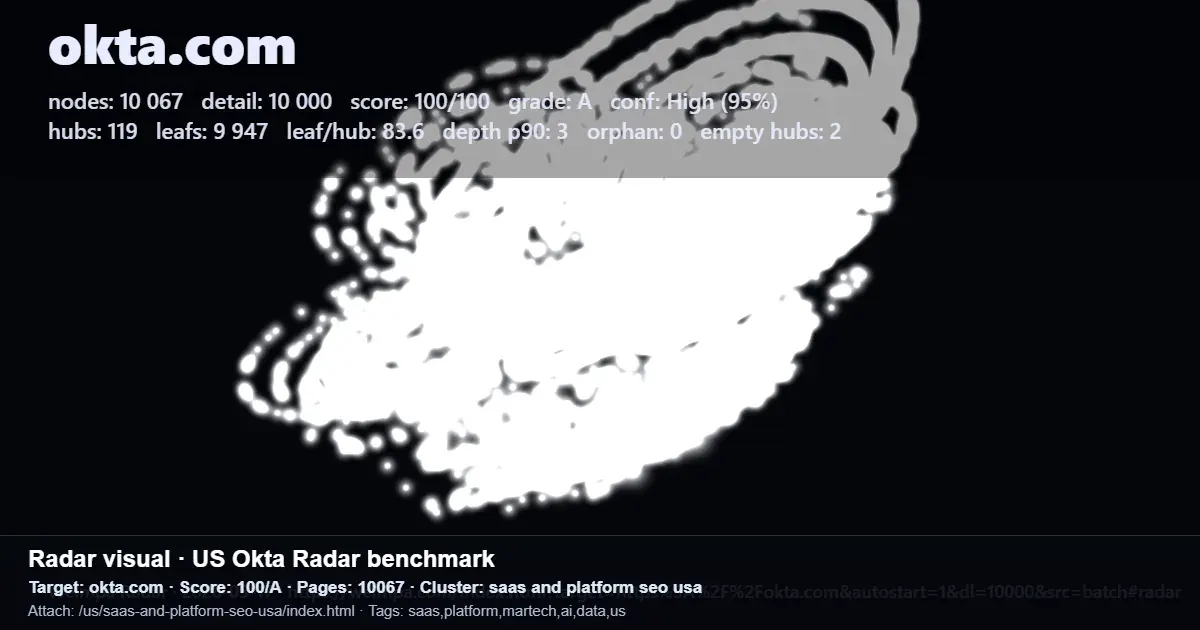
Finally, read the structure at scale. Radar benchmarks include page counts, hub counts, leaf counts, ratios, depth, and structure scores across public websites. This helps teams move beyond a file-only check and see whether discovery, architecture, and internal links are working together.
What to keep in mind
This check is useful when you are unsure whether robots.txt blocks important sections, whether sitemaps are outdated or incomplete, or whether multiple sitemaps exist without a clear structure or owner. It is also useful before a broader SEO audit, migration review, or retainer decision.
This is not a guarantee that every page will be indexed. A sitemap and robots review can confirm access, alignment, and obvious blockers, but indexing also depends on how pages are structured, linked, and understood within the broader site.
For privacy and measurement, the website may process submitted form data and technical data such as IP address, device, browser, referral source, pages viewed, timestamps, and cookie or analytics identifiers. Analytics and marketing tools may be used to operate, secure, measure, and improve the website, with consent where required by law.