
Multi-location Page Evidence Gate
What this page covers
Multi-location Page Evidence Gate
A Multi-location Page Evidence Gate is a checkpoint for deciding which city, service, or location pages are ready to move deeper into your SEO architecture.
Use it before scaling a local rollout, so pages with real demand, distinct content, clear crawl paths, and maintainable data move forward while weaker pages stay in review.
In brief
- The gate helps teams avoid publishing large batches of thin local pages before a pilot or rollout is clearly scoped.
- It checks whether city, service, and location pages are useful, distinct, indexable, and supported by internal links, sitemaps, and a clear hierarchy.
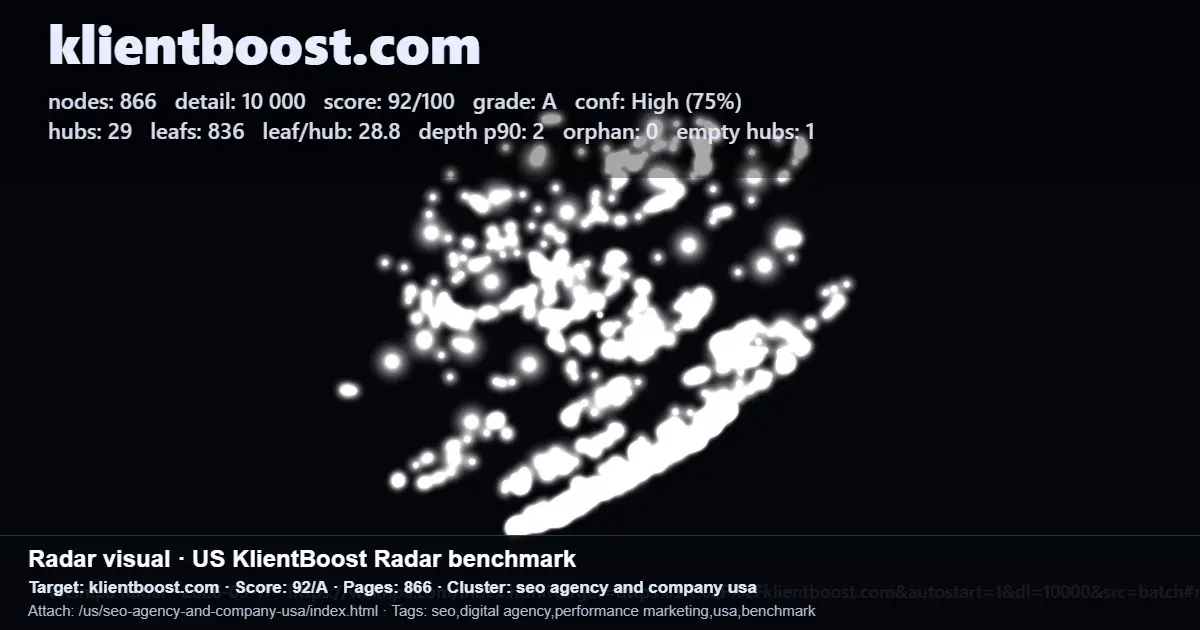
- Radar can support the review by scanning existing local structure, hubs, weak spots, and large page sets before more pages are promoted.
What to do
Start with page qualification. For each proposed city, service, or location page, confirm that the target has enough search demand to justify its own URL and that the content can avoid a repetitive doorway pattern. If the local combination is unclear, keep it in a pilot or backlog instead of pushing it into the main architecture.
Next, review structure and exposure. A page should not be buried so deeply that crawlers and users cannot understand where it belongs. Internal links and sitemaps should make the relationship between hubs, services, cities, and leaf pages clear. The goal is not just to create pages, but to build a hierarchy that supports discovery and indexation.
Finally, connect the gate to maintainable data. Local pages become harder to scale when teams must manually update the same phone, address, pricing, service, or equipment details across many URLs. Centralized page data and clean, predictable URLs reduce maintenance friction as the footprint grows.
What to keep in mind
This checkpoint is most useful when a business manages many locations, service areas, or city-and-service combinations. Large architectures can include thousands of pages across hubs and leaves, so a clear pass-or-hold process helps keep expansion controlled rather than chaotic.
The gate should be strict about weak local content. City and service pages can become thin, repetitive, or doorway-like if they mostly repeat the same template text. A page needs a clear reason to exist beyond swapping in a city or service name.
The gate does not replace technical review. Page speed, code quality, crawl paths, URL format, and indexation still matter. Template performance can be checked, but final results depend on the live site, hosting, implementation, and whether teams keep local data current.