
Marketplace city page seo structure
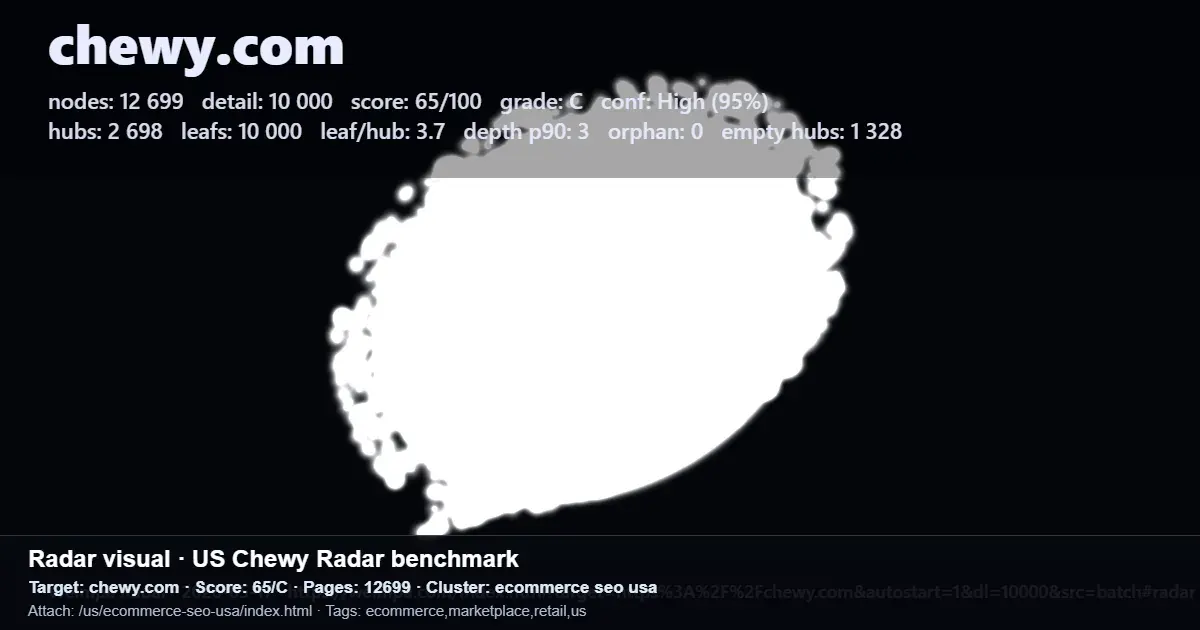
What this page covers
Marketplace city page seo structure
Designing marketplace city pages starts with a clear, connected site structure. When your location hubs are easy to discover, both search engines and users can move from high-level city pages to the right inventory clusters without friction.
SEO & GEO Radar helps you inspect that structure in practice. Run the free demo, review the generated map, and quickly see where city pages, hubs, and leaves are missing, thin, or poorly connected across your marketplace.
In brief
- Use sitemap-first discovery, with a crawl fallback, to surface all city, category, and inventory URLs that should be tied into your marketplace’s location structure.
- Map city hubs, neighborhood or segment hubs, and inventory leaves so you can spot missing hubs, orphan leaves, and thin clusters that weaken marketplace city page SEO.
- Share the Radar map with your team to align on which city and inventory clusters to strengthen, then iterate on internal linking and hub coverage based on what you see.
What to do
A strong marketplace city page SEO structure starts with reliable discovery. With SEO & GEO Radar you can use sitemap-first discovery, with a crawl fallback when sitemaps are missing or incomplete, so you see how all your city, neighborhood, and inventory URLs are actually organized today.
Once the map is generated, you can use it to spot missing hubs, orphan leaves, and thin clusters. For a real estate marketplace, this means checking whether property inventory pages are properly connected to city and neighborhood hubs, and whether segment or intent hubs for buyers and renters exist or are weak.
After validating the output from the free demo, you can share a screenshot and link with your team. This makes it easier to decide which inventory clusters should be highlighted for search, where internal linking between inventory, location hubs, and scenario pages is inconsistent, and where competitors with clearer hierarchies may have an advantage in AI-powered search.
What to keep in mind
Many marketplaces discover that property inventory pages are siloed and not well connected to city and neighborhood hubs. Search engines may index many individual listings but fail to understand the underlying structure, which limits the impact of your city pages in organic search.
Segment and intent hubs for different audiences, such as buyers and renters, are often missing or weak. Internal linking between inventory, location hubs, and scenario pages can be inconsistent, making it hard to decide which inventory clusters to group or highlight for search and for users navigating by city.
SEO & GEO Radar is best suited for teams that want to visualize how their existing pages connect, rather than generate content automatically. If you need higher limits or help interpreting complex maps, you can start with the free demo output and then explore pricing for deeper diagnostics and support.