
Programmatic seo for marketplace websites
What this page covers
Programmatic seo for marketplace websites
Programmatic SEO for marketplace websites means building a structured layer of pages that match real search demand instead of publishing one-off, generic content. For US marketplaces, this layer should reflect how buyers actually search across states, cities, industries, and scenarios.
SEO/GEO Community US helps marketplaces see their current structure, find gaps, and plan this search layer. With Radar scans and hub/leaf architecture, teams can see which marketplace pages are visible in Google and AI search, where discovery is blocked, and what to fix first to attract qualified inbound demand.
In brief
- Programmatic SEO for marketplace websites focuses on turning high-intent search demand into scalable hub and leaf pages, instead of relying on a few broad landing pages or paid acquisition alone.
- SEO/GEO Community US uses Radar scans and practical diagnostics to show how a marketplace site is structured today, which hubs and listings are discoverable, and where indexing or internal linking is limiting organic demand.
- When structural gaps are found, 1000&1 Pages helps plan and build the missing search layer for US marketplaces: demand mapping, hub/leaf page planning, evidence-backed content, internal linking, and deployment support.
What to do
SEO/GEO Community US is a practical hub for US marketplaces that need qualified inbound demand from Google and AI-powered search. Instead of chasing isolated keywords, the focus is on programmatic SEO: mapping real marketplace demand into a clear hub/leaf architecture, improving sitemap quality, and strengthening internal linking so that the right category, location, and listing pages can be discovered and indexed.
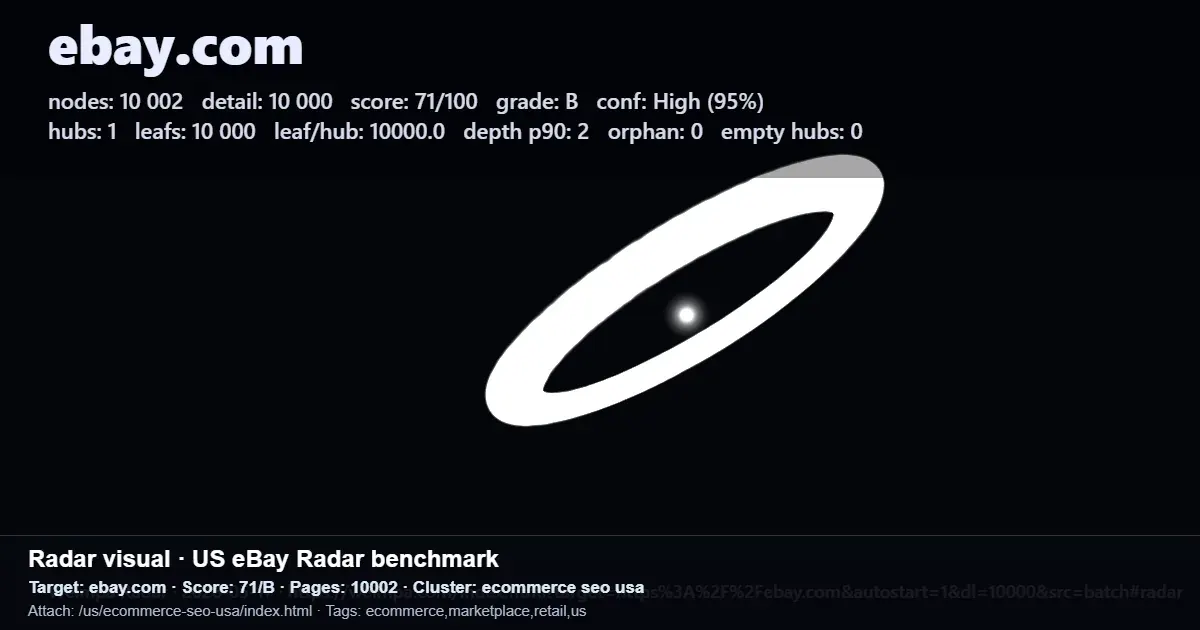
The first product layer is Radar, a public website structure scan that shows how a marketplace is actually organized in search. Radar visualizes the website graph, highlights hubs, leaves, and weak entry points, and checks sitemap, robots, and home access. For marketplace teams, this makes it easier to see which sections are visible, which are buried, and how current structure affects search demand coverage across locations and verticals.
When Radar reveals structural gaps, 1000&1 Pages helps build the missing search layer for the US market. This includes US demand mapping, hub/leaf page planning, evidence-backed Q&A and information pages, internal linking improvements, deployment and sitemap submission, and growth monitoring. The goal is not to flood the site with generic content, but to create a measurable inbound layer that answers real marketplace questions, supports buying committees, and turns search demand into qualified conversations.
What to keep in mind
Programmatic SEO for marketplace websites works best when there is meaningful, recurring search demand across locations, categories, or buyer scenarios. It is especially relevant for US marketplaces, directories, franchise-style platforms, and multi-location businesses that want to be discovered in Google and AI search without relying only on paid acquisition.
This approach is less suitable for sites that are not ready to adjust their structure, sitemaps, or internal linking, or that expect quick wins from a handful of pages. Radar and 1000&1 Pages focus on structural visibility: hubs, leaves, indexing, and demand coverage. Results depend on how well a marketplace can implement recommended changes and maintain a consistent hub/leaf architecture over time.
SEO/GEO Community US publishes guides, Radar teardowns, benchmarks, and examples covering programmatic SEO, GEO, indexing, sitemap quality, internal linking, content risk, and search demand coverage. Marketplace CMOs, growth teams, SEO leads, agencies, and product teams can use these diagnostics to prioritize what to fix first, decide where to invest in new pages, and track how their marketplace visibility evolves in the US market.