
Property marketplace seo architecture
What this page covers
Property marketplace seo architecture
Property marketplace SEO architecture is how your real estate marketplace is structured so search engines can discover, crawl, and index the right listings at scale. The focus is on hubs, listing pages, and how they connect to cover US search demand across states, cities, and neighborhoods.
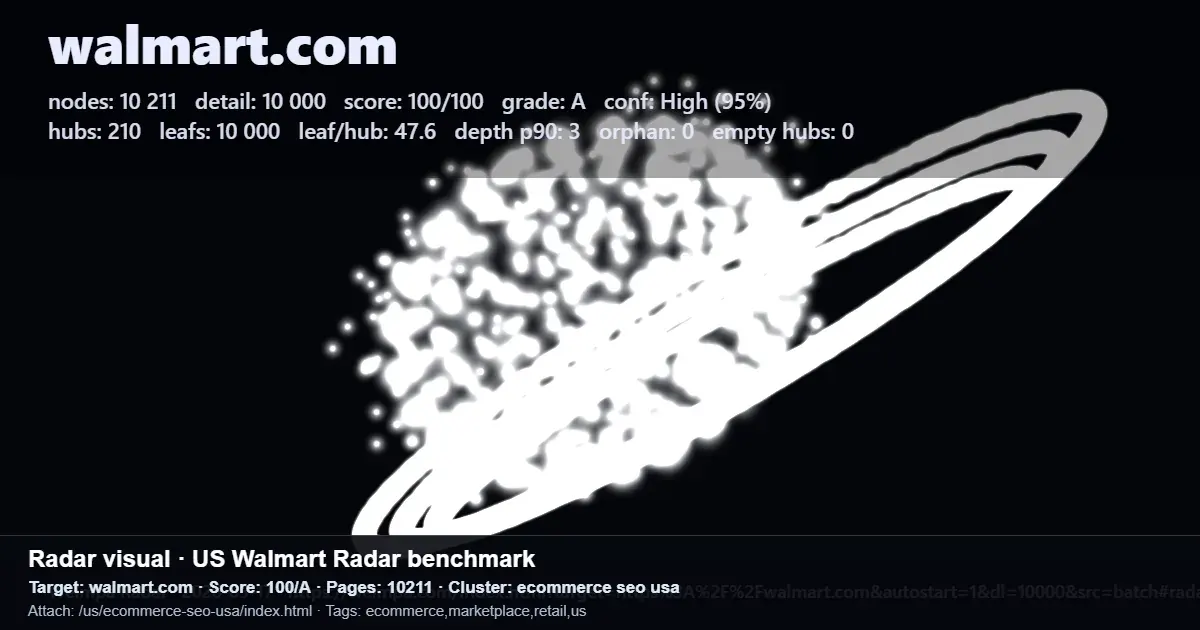
With Radar, you see your current architecture as a visual map of nodes, hubs, and leaf pages, similar to ecommerce benchmarks. The scan highlights where discovery is blocked and which parts of your property marketplace should be fixed first to grow organic visibility and qualified traffic.
In brief
- Property marketplace SEO architecture defines how hubs and listing pages are organized so Google and AI search can efficiently crawl large inventories and metro coverage without missing key locations.
- Radar turns your live site into a graph of nodes, hubs, and leaf pages, showing which sections are visible, which are weak entry points, and where structural layers are missing.
- Once gaps are clear, 1000&1 Pages helps design the missing hub/leaf layer, align sitemaps and internal links, and build pages that match real US search demand for property and location queries.
What to do
For US property marketplaces, SEO architecture starts with seeing the site the way search engines do. A Radar scan turns your public domain into a graph of pages: total nodes, hubs, and leaf pages, similar to how ecommerce sites like Chewy or Nike are benchmarked. You get a structural score and a view of how many detail pages sit under each hub, which is critical when you manage thousands of listings across metros and neighborhoods.
SEO/GEO Community US uses this scan as the first step for marketplaces and real estate platforms that need qualified inbound demand from Google and AI-powered search. The scan shows which hubs are strong, which listing clusters are thin or hard to reach, and where discovery is blocked by weak internal linking, outdated sitemaps, or misaligned robots settings. Instead of guessing, you see exactly which parts of your architecture limit crawl, indexing, and coverage for important markets.
When Radar exposes a structural gap, 1000&1 Pages helps build the missing search layer around your property inventory. That includes US demand mapping, hub and leaf page planning across cities and metros, evidence-backed Q&A content, internal linking patterns, deployment, sitemap submission, and growth monitoring. The goal is not more generic content, but a measurable inbound layer that reflects real search behavior and turns marketplace traffic into qualified conversations with buyers, renters, and agents.
What to keep in mind
Property marketplace SEO leads often deal with very large inventories and listing pages that are hard for search engines to crawl and index efficiently. City and metro hubs can be inconsistent, with some markets well structured and others fragmented or missing, which weakens coverage for high-value locations and property types. In this context, architecture work is about fixing structure before chasing more content.
Typical issues include weak internal linking that leaves many property and category pages as poor entry points, plus sitemaps and robots settings that are outdated or misaligned with the current site architecture. AI search and Google updates tend to expose these technical and structural weaknesses, but they can be hard to diagnose without a clear, external view of the site graph and demand coverage by city, neighborhood, and property segment.
Radar and 1000&1 Pages are a fit if you want a diagnostic and planning layer for your marketplace, not a generic content factory. The approach is best suited to US-focused teams that care about high-intent search demand across states, cities, and metros, and who are ready to adjust hubs, leaf pages, and sitemaps based on data. It is less suited to very small sites without meaningful inventory or to teams that are not prepared to change their site structure.