
Pages Discovered Not Indexed Playbook
What this page covers
Pages Discovered Not Indexed Playbook
Use this playbook when important pages are discovered but still not indexed. It helps SEO and growth teams review missing, blocked, duplicated, or under-discovered URLs in a structured way.
Radar supports large page-set reviews with interpretation, comparison, JSON import, and up to 20,000 pages per run, so teams can move from scattered URL checks to clearer indexing triage.
In brief
- Start by grouping affected URLs by sitemap, hub, template, launch wave, product area, industry page, or location page so patterns are easier to spot.
- Check sitemap inclusion, internal links, duplicate or near-duplicate pages, and possible technical blocks before assuming there is only one cause.
- Use Radar to interpret and compare large page sets, then use structured imports or exports when the team needs one shared view of affected URLs.
What to do
A discovered-not-indexed review should start with organization. The issue is often not one isolated URL, but a set of important product, industry, or location pages that are missing, blocked, duplicated, or not discovered deeply enough.
Radar is built for page-scale review, not only one-off URL checks. Its plan details include interpretation, comparison, JSON import, and 20,000 pages per run, which supports batch analysis across hubs, leaf pages, and large publishing sets.
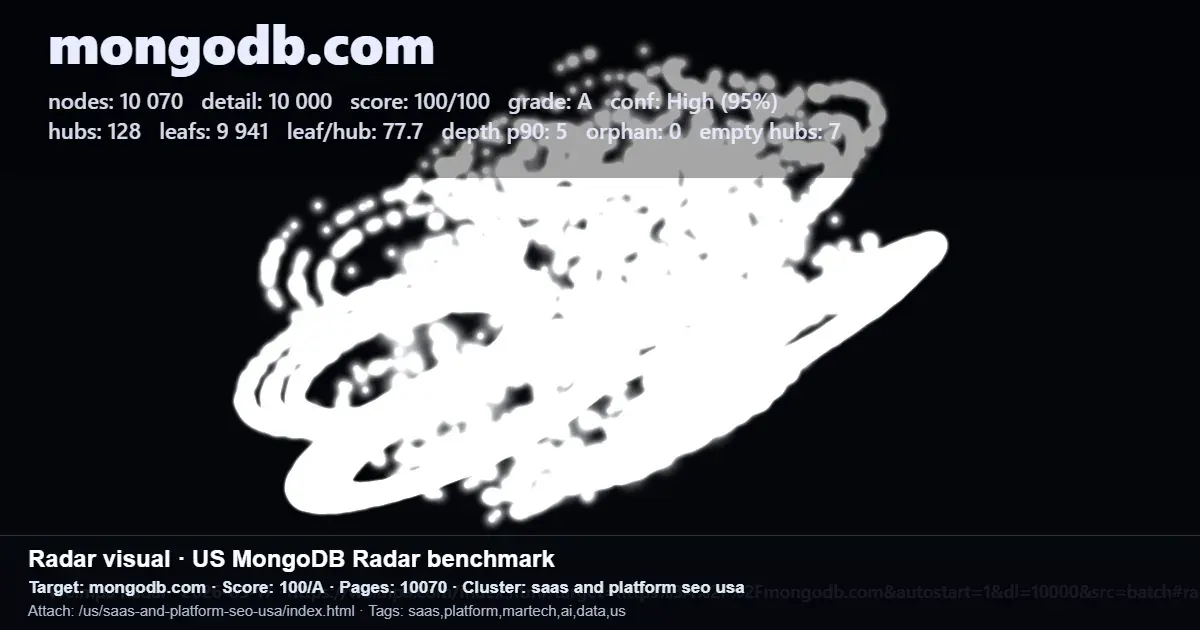
Benchmark examples show Radar applied to sites with thousands of pages, including targets with 5,052 and 5,299 pages and visible hub and leaf counts. That supports a practical workflow: map the page universe, segment affected URLs, and prioritize the groups that need deeper review.
What to keep in mind
This playbook is most useful when your team can already identify URLs or page groups that appear missing, blocked, duplicated, or under-discovered. It works best when those URLs can be grouped by sitemap, hub, template, or publishing batch.
It should not be treated as a promise that any specific page will be indexed. The available Radar details support review, interpretation, comparison, and structured page analysis, not guaranteed indexing outcomes.
Use the findings to align SEO, content, engineering, and growth teams around shared priorities. If important page groups remain missing after sitemap, structure, duplicate, and linking checks, the next step is deeper diagnosis instead of repeated resubmission alone.