
Digital Analytics or RevOps Lead
What this page covers
Digital Analytics or RevOps Lead
If you lead Digital Analytics or RevOps and need to explain how a public site shows up across search, competitors, and role-based page coverage, you may need a clearer outside view before recommending changes.
A practical first step is to run Radar on a public target URL, then confirm whether the site can be scanned directly or whether a URL snapshot is the better fit.
In brief
- You may need a shared view beyond internal dashboards: pages, clusters, scores, tags, and areas where important roles or topics are under-covered.
- Radar can help when you need a structured benchmark of a public site or competitor, not a promise of rankings, pipeline lift, or automatic content fixes.
- Before you start, check access limits. Radar does not scan sites behind logins, paywalls, or aggressive bot protection; use a URL snapshot instead.
What to do
For a Digital Analytics or RevOps lead, the issue is often not a lack of data. It is the need to give stakeholders a clear external view of how the site is organized for discovery across pages, clusters, and visible topic areas.
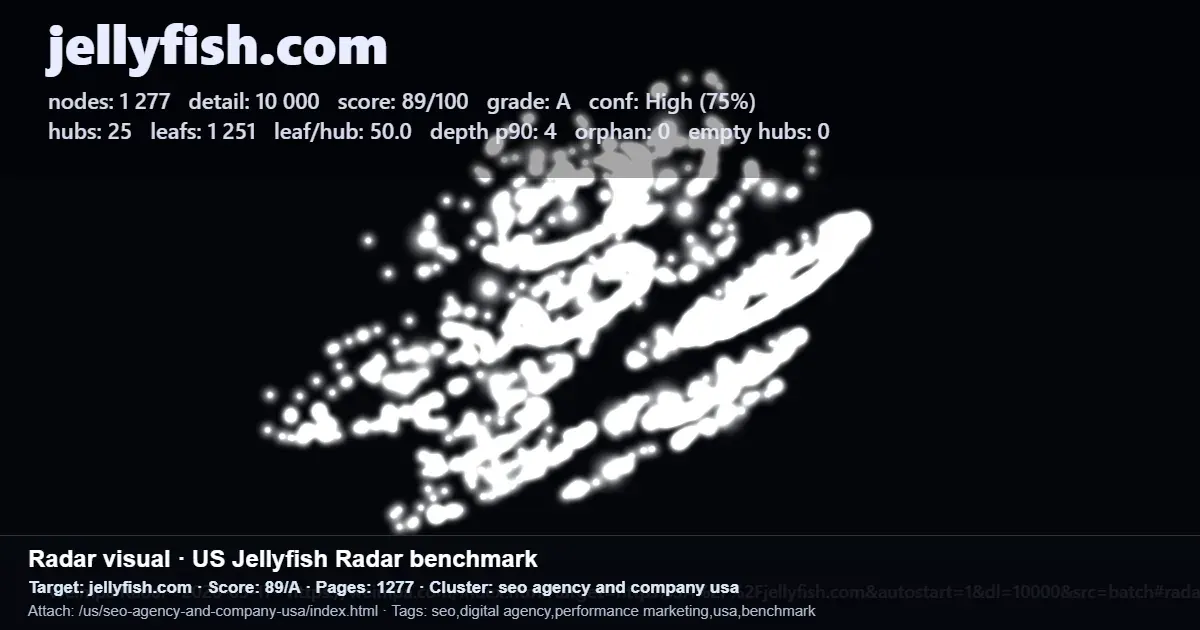
Radar is built for public-site benchmarking. Benchmark examples can include page counts, scores, clusters, and tags for US targets, helping you frame questions about competitor visibility, market coverage, or role-based page gaps.
Start with one public URL that represents the site or competitor you need to understand. If the site is gated, protected, or difficult for Radar to scan, use a URL snapshot so the review stays practical and within stated limits.
What to keep in mind
Radar should be treated as a visibility and benchmarking tool, not a guaranteed growth system. Its grounded use is to inspect public site structure and benchmark-style signals such as pages, scores, clusters, and tags.
There are clear access limits. Radar does not scan sites behind logins, paywalls, or aggressive bot protection, so private analytics areas, gated products, and protected portals are not suitable scan targets unless you provide a URL snapshot.
For analytics and RevOps work, Radar can be a useful first step when you need a shared view before deeper planning. It can help frame the right questions without promising rankings, pipeline impact, or automatic fixes.