
In-house SEO Lead in US Organization
What this page covers
In-house SEO Lead in US Organization
If you lead SEO inside a US organization, you may be trying to turn a large, complex, or legacy site into a roadmap that product, content, and leadership teams can understand.
A practical first step is to run a Radar scan on the domain or priority section, so you have an outside structural view before proposing larger architecture changes.
In brief
- You may need a neutral way to explain site structure, page groups, hubs, leaves, depth, orphan pages, empty hubs, scores, and grades to non-SEO stakeholders.
- A Radar benchmark-style scan may fit when you need a visual diagnostic to support roadmap alignment, prioritization, or a discussion about consolidation and expansion.
- Before starting, choose a domain or section tied to a real decision, and treat the scan as a structural input rather than a complete SEO strategy on its own.
What to do
For an in-house SEO lead, the tension is often not a lack of SEO issues. It is turning structural signals from a large US site into a clear, executive-friendly blueprint that helps teams agree on what to address first.
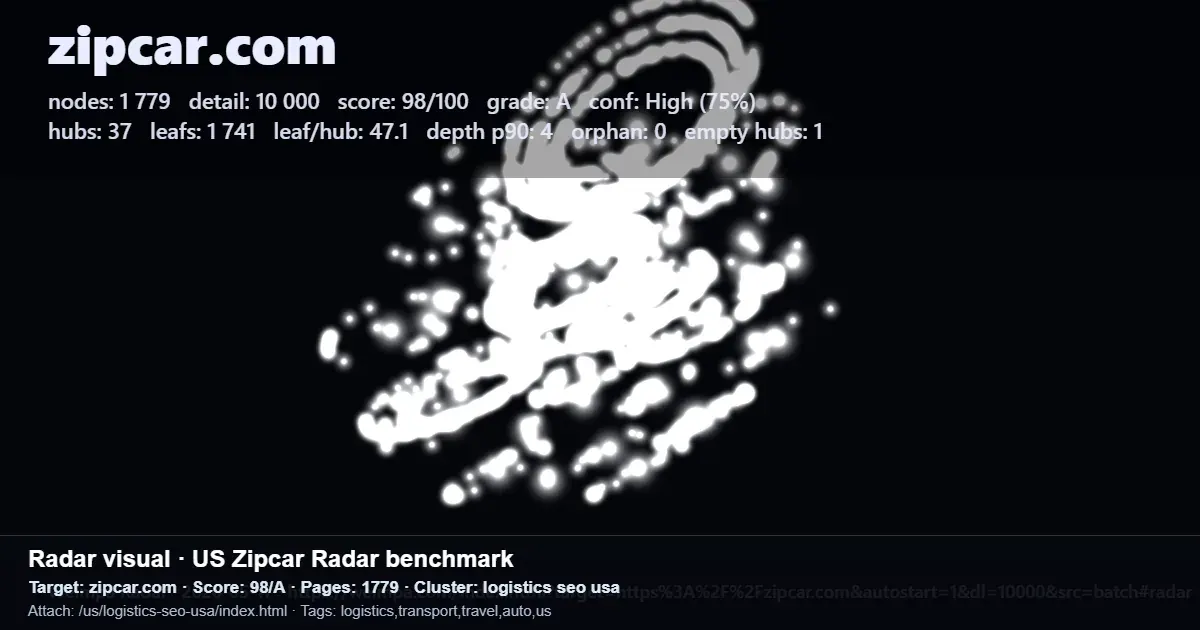
Radar supports that task with an external visual diagnostic and benchmark-style view. Available examples show page counts, scores, grades, hubs, leaves, leaf-to-hub ratios, depth, orphan pages, and empty hubs across US SEO clusters such as education, logistics, and real estate.
Start with the site area connected to your next roadmap conversation. Use the scan to frame practical questions about hub and leaf structure, internal architecture, pruning, consolidation, or expansion before teams move into implementation details.
What to keep in mind
Radar benchmark examples include sites with 90 pages, 282 pages, and 11,759 pages, with reported structural counts and scores. This can make patterns easier to discuss, but it does not guarantee rankings, traffic, or business outcomes.
The scan should be used as a structural diagnostic, not as the final decision on its own. Indexing, sitemap, internal linking, pruning, and consolidation choices still need your internal context, constraints, and stakeholder review.
This next step is reasonable when you need a shared visual anchor for SEO roadmap alignment. It can help focus the conversation on visible structure before your team commits to larger architecture work.