
Performance Marketing Lead Reducing PPC Dependence
What this page covers
Performance Marketing Lead Reducing PPC Dependence
If you lead performance marketing and PPC is getting harder to scale efficiently, you may need an organic search layer that supports acquisition without replacing paid overnight.
A practical first step is to use Radar to review whether your site structure, indexed pages, hubs, leaf pages, navigation, and internal links are helping or limiting discovery.
In brief
- You may need a clearer view of where organic search can support paid acquisition, especially for high-intent pages that are expensive or constrained in PPC.
- A diagnostic scan is a safer starting point: benchmark site structure and indexation signals before shifting budget or committing to a larger organic program.
- Before creating new pages, check whether key acquisition pages are indexable and whether canonicals, noindex rules, pagination, navigation, or weak internal links are blocking discovery.
What to do
For a performance marketing lead trying to reduce PPC dependence, the practical question is not only whether to publish more pages. It is whether your current site gives search systems a clear structure for finding and connecting commercial pages.
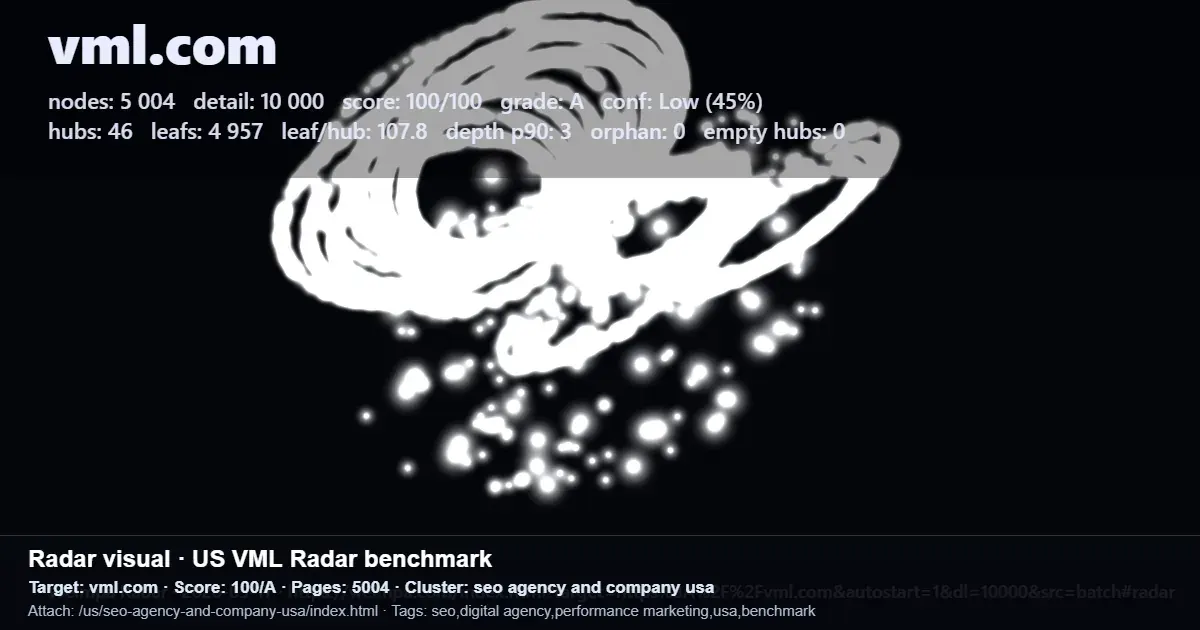
Radar may fit when you need a diagnostic view of a target site: pages, hubs, leaf pages, depth, score, cluster context, and benchmark-style comparisons. This can support a more grounded discussion about where organic search may complement paid acquisition.
Start with the pages closest to acquisition: paid landing pages, high-intent sections, product or service pages, and supporting hubs. Then look for indexation barriers, closed pagination, thin navigation paths, or missing internal links before planning new content.
What to keep in mind
The grounded signals here are structural: indexation, pagination access, navigation, internal linking, page depth, hubs, leaf pages, and Radar benchmark views for large US sites. These signals can inform decisions, but they do not guarantee rankings, traffic, CAC improvement, or revenue growth.
This is not a replacement for paid media management, attribution analysis, creative testing, or budget planning. It is most useful when you need to understand whether site architecture is helping or weakening an organic layer alongside paid acquisition.
This next step is reasonable because it starts with diagnosis rather than a broad SEO commitment. You can examine whether important pages are discoverable, internally linked, and placed inside a clearer structure before committing more resources.