
Technical SEO Manager
What this page covers
Technical SEO Manager
If you’re a Technical SEO Manager responsible for a large or complex site, the pressure is often to see the structure clearly: pages, hubs, leaves, depth, and semantic signals for search and AI search.
A practical first step is to run Radar as a first-pass benchmark, then decide whether you need a deeper technical review, hub and leaf cleanup, or semantic content work.
In brief
- You may need a faster way to understand a complex site before building another audit from multiple tools or reviewing thousands of URLs by hand.
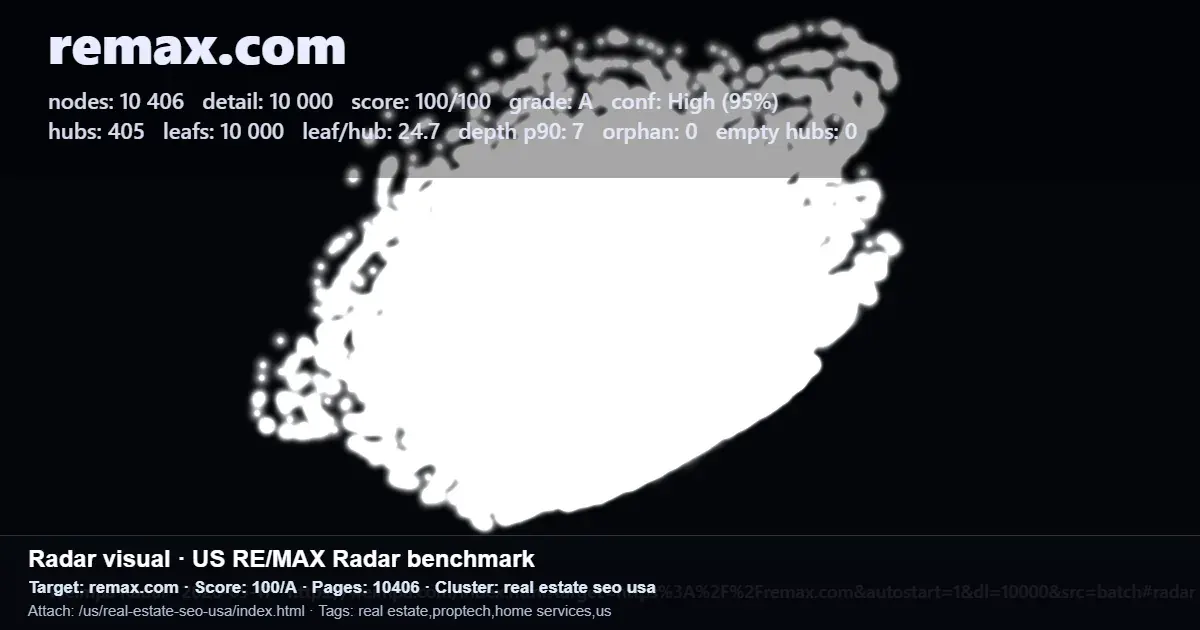
- Radar may fit when you need a standardized first-pass view of page counts, hubs, leaves, depth, scores, grades, and cluster context for a site or section.
- Before you act on the output, check the target market, site type, and review goal, and treat any score or grade as a directional signal, not a guaranteed SEO result.
What to do
For a Technical SEO Manager, the useful starting point is not another broad SEO checklist. It is a structured view of the site you manage, especially when architecture, templates, and scale make issues harder to see.
Radar supports benchmark-style reviews using page counts, scores, grades, hubs, leaves, depth, and cluster labels such as healthcare SEO USA or professional services SEO USA. This can help you frame a consistent first-pass diagnostic before deeper audit work.
For content-side technical work, Radar also connects to semantic SEO for AI-driven search. You can use that lens to review templates, product pages, programmatic sections, and hub or leaf pages for clarity, query fit, and concise technical explanations.
What to keep in mind
Radar benchmarks can help organize a first look at structural and semantic signals, but they should not be treated as proof that rankings, indexing, or AI search visibility will improve.
The strongest fit is an initial map for complex sites, not a replacement for your crawl process, internal data, log analysis, or technical prioritization. Use the output to decide what deserves closer inspection.
This first step makes sense when your team needs a shared view before discussing architecture, internal linking, hub and leaf templates, or AI-search content coverage, without committing to a full audit first.