
Technical seo site architecture audit
What this page covers
Technical seo site architecture audit
A technical SEO site architecture audit reviews how your sections, URLs, and navigation are structured so search engines can crawl and understand them efficiently. It focuses on how your content is organized into hubs and leaf pages that reflect real search demand and user journeys.
By mapping your structure against priority queries and competitor sections, the audit highlights missing or thin areas, such as topics rivals cover with full sections while you only have a brief overview. This reduces guesswork when planning new pages or reorganizing existing ones, especially for multi-location and service-led sites.
In brief
- A technical SEO site architecture audit checks how your URLs, sections, and internal links are organized so search engines can crawl, index, and understand them with minimal friction across all locations and services.
- By comparing your structure to real search demand and competitor sections, the audit exposes missing hubs and leaf pages, thin content, and navigation issues that limit organic growth and confuse users.
- The outcome is a prioritized map of fixes and new sections to build, so you can expand into high-value topics and locations systematically instead of guessing what to publish next.
What to do
A strong technical SEO site architecture audit starts by inventorying your existing sections, subfolders, and key URLs. Using your sitemap where possible, and a crawl when it is incomplete, you map how content is grouped into hubs and leaf pages and how many clicks it takes to reach important templates. This reveals structural issues such as orphaned pages, over-deep nesting, and inconsistent URL patterns that make crawling and understanding your site harder, especially at scale.
Next, you layer search demand and competitor structure on top of that map. Pull a list of priority queries and compare them to your current sections: where competitors have full topic clusters or dedicated city and service sections, you may only have a single overview page. That gap analysis shows which hubs and leaf pages you should add or expand. It also highlights where internal links and navigation should be strengthened so that search engines can clearly see topical relationships and users can move between related locations or services.
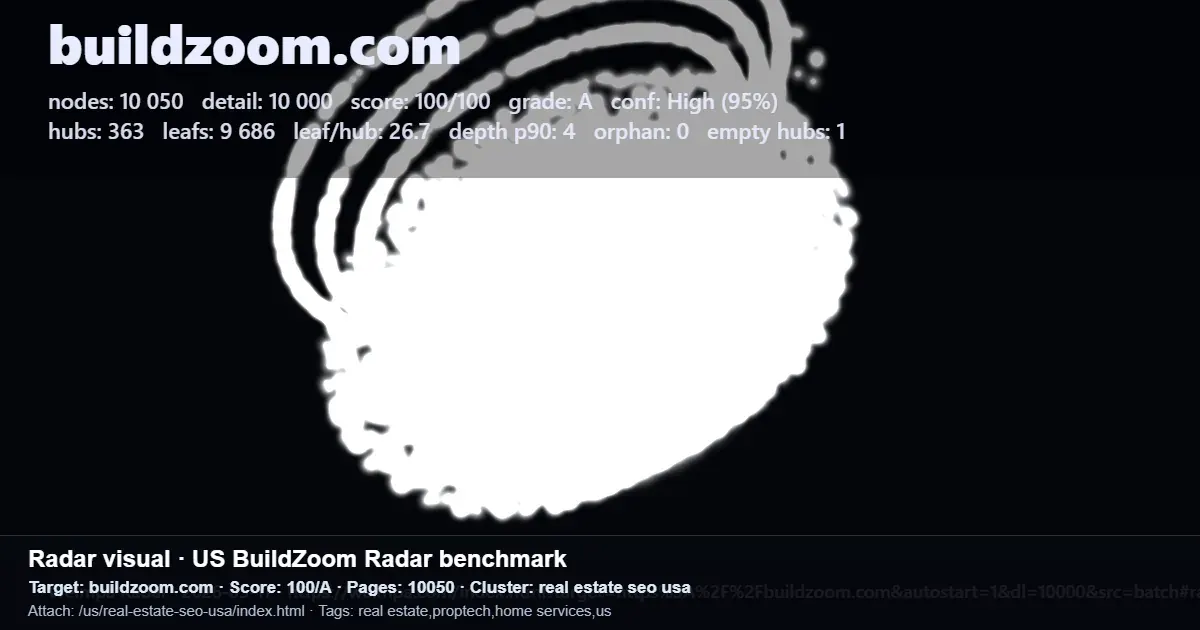
Finally, you turn the findings into an actionable roadmap. This typically includes restructuring key sections, simplifying URL paths, improving click depth for revenue pages, and planning new content clusters around uncovered demand. Tools like Radar can support this by discovering URLs via sitemap-first logic with a crawl fallback, then visualizing how your architecture aligns with search behavior. The result is a cleaner, more scalable structure that supports both multi-location SEO and future content growth.
What to keep in mind
A site architecture audit is not a ranking guarantee. It improves crawlability and topical clarity, but outcomes still depend on content quality, competition, and broader SEO signals. Even a perfectly structured site can underperform if pages are thin, outdated, or misaligned with user intent in key markets.
Automated discovery also has limits. If key sections sit behind logins, paywalls, strict access controls, or aggressive bot protection, crawlers and tools cannot see them. In those cases, you may need to provide a curated URL list or export so the audit can include those areas in the structural analysis and avoid blind spots.
Competitor comparisons must be interpreted carefully. Seeing that a rival has an entire section for a topic or city does not mean you should copy it blindly. The audit should confirm that there is real search demand and that the topic fits your goals before recommending new hubs or leaf pages, especially for multi-location or niche services where resources are limited.