
Saas use case page seo structure
What this page covers
Saas use case page seo structure
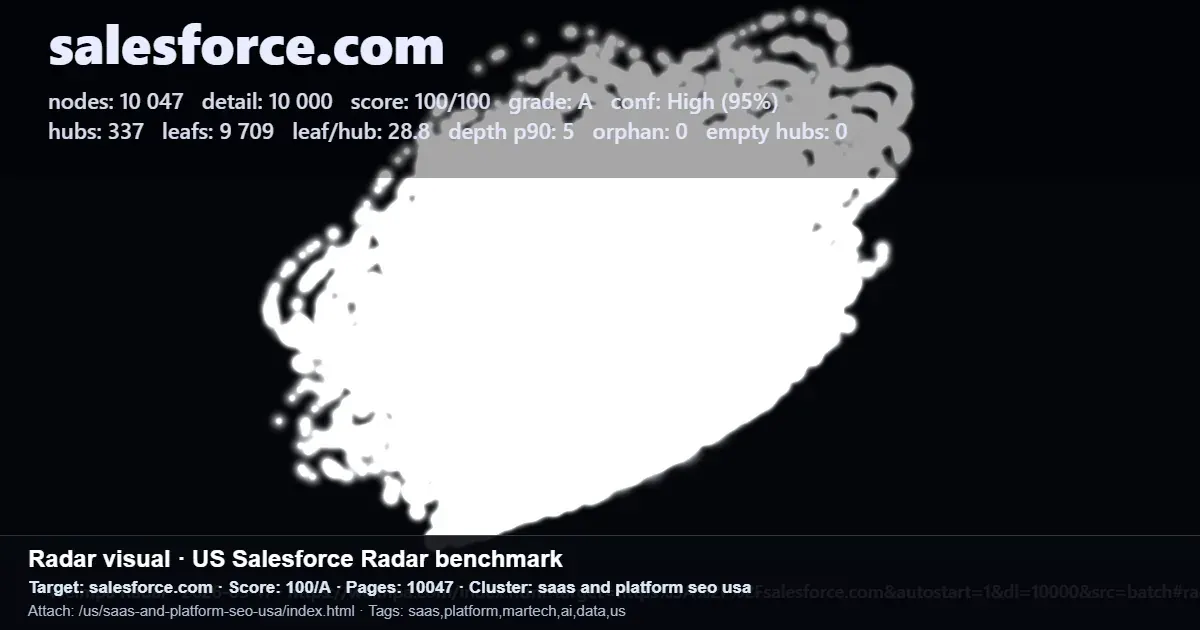
Strong SaaS use case pages start with a clear site structure. Radar reads your sitemaps, builds a graph of your pages, and shows how each use case fits into your overall SEO architecture for Google and AI search.
If sitemap discovery fails, Radar falls back to a shallow crawl within fair use limits. You still get a practical map of hubs, leaves, and clusters so you can design use case pages that search engines and AI systems can understand and trust.
In brief
- Start from your existing sitemaps. Radar discovers them via robots.txt, reads the URLs, and shows how your SaaS use case pages are currently structured for search and AI assistants.
- Use a repeatable scan story with your team. Capture the map, agree on three key findings, define three fixes to your use case clusters, then rescan to see if structure and coverage actually improved.
- Treat use case pages as part of a cluster, not standalone assets. Use the Radar map to connect them to relevant hubs, integrations, and comparisons so they can rank more reliably and support real buying journeys.
What to do
A solid SEO structure for SaaS use case pages starts with visibility into your current site map. Radar tries to extract sitemaps via robots.txt, then reads sitemap URLs and builds a graph of your site. This graph makes it easier to see where use case pages live, which hubs they depend on, and where you have gaps or thin clusters that weaken topical coverage.
When sitemap discovery does not work, Radar falls back to a shallow crawl within fair use limits. Even this limited crawl is often enough to surface patterns such as missing hubs, orphaned use case pages, or overlapping topics that confuse search engines and AI systems. You can then decide which pages to consolidate, which to expand, and where to add internal links to support your most important SaaS use cases.
To keep improvements moving, use a simple scan story pattern with your team. Start from a fresh Radar map, agree on three key findings about your use case structure, define three concrete fixes, then rescan. Repeating this loop helps you move from ad hoc landing pages to a coherent, graph-backed structure that is easier for Google and AI search to interpret and recommend.
What to keep in mind
Radar focuses on site structure diagnostics, not copywriting or visual design. It shows how your SaaS use case pages are connected through sitemaps and discovered URLs, but it does not guarantee rankings or traffic. The value comes from giving your team a clear structural map so you can make informed SEO decisions and experiments.
Because Radar relies first on robots.txt and sitemaps, the quality of your existing configuration matters. If sitemaps are missing, blocked, or incomplete, Radar will fall back to a shallow crawl with fair use limits, which may not capture every deep, gated, or parameterized use case page. In those situations, you may need to refine your sitemaps before expecting a complete picture.
This approach works best for teams willing to iterate. You run the free demo, validate the output, use the map to spot missing hubs, orphan leaves, and thin clusters, then share the link internally. If you later need higher limits or more interpretation support, you can explore pricing, but the core workflow stays the same: map, find issues, fix, and rescan.