
Seo agency vs programmatic seo system
What this page covers
Seo agency vs programmatic seo system
Choosing between a traditional SEO agency and a programmatic SEO system starts with how you want to scale. Agencies rely on manual research, writers, and campaign-style projects. Programmatic systems use data, templates, and automation to publish many high-intent pages in a consistent way.
Recent work with SaaS teams highlights programmatic SEO tactics such as spreadsheet or AI keyword expansion, hub-and-spoke page design, and continuous testing. For SaaS companies that need fast, compounding growth, a system that turns your product and data into an SEO engine can complement or replace classic agency work.
An SEO agency typically relies on manual research, creative content, and campaign-style execution, which can work well but may scale slowly for large keyword sets.
In brief
- An SEO agency is usually built around people: strategists, writers, and link builders who run projects and campaigns. This can be effective for complex topics and brand storytelling, but it is hard to extend to thousands of long-tail or geo-modified keywords.
- A programmatic SEO system is built around structure: clean data sources, keyword frameworks, templates, and automation. It is designed to generate and maintain many similar pages that match clear search patterns, such as use cases, industries, or locations for a SaaS product.
- For SaaS teams, the best setup is often a mix. Use programmatic SEO as the core engine for scalable, repeatable pages, and use an agency or in-house team for strategy, experiments, and high-touch content that needs more creativity.
What to do
Programmatic SEO planning for SaaS usually starts from a clear source of truth: your product data, customer segments, and real search demand. Teams define a core keyword plus modifier pattern, then use spreadsheets or AI-driven keyword generation to map the opportunity space in a structured way. This creates a repeatable blueprint instead of one-off ideas.
Instead of writing every page from scratch, a programmatic system relies on reusable templates and hub-and-spoke architecture. Hubs cover broad topics such as “programmatic SEO for SaaS,” while spokes target specific modifiers like industries, roles, or locations. This keeps pages aligned with user intent and search guidelines, while allowing hundreds or thousands of pages to be created, updated, and tested consistently.
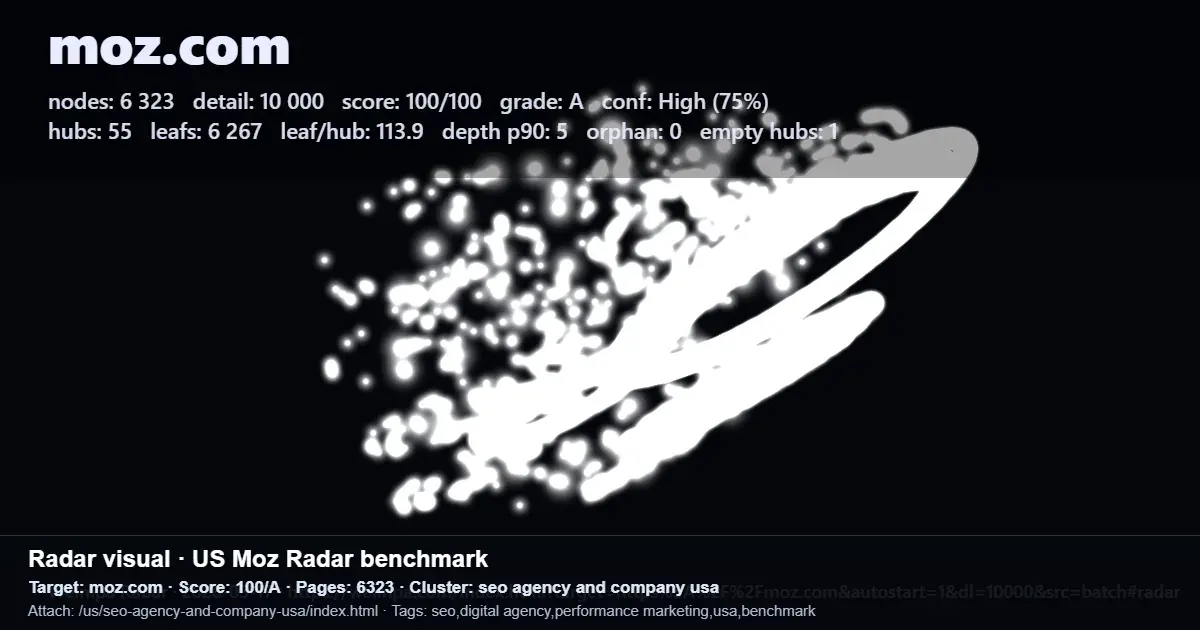
SEO agencies in the US, including large digital and performance marketing groups, are often judged on the size, structure, and quality of the sites they help build. Radar benchmarks show examples with thousands of pages and many hubs, powered by systematic, data-led planning. A programmatic SEO system brings that same structured thinking directly into your SaaS product and content operations, so you are not limited by manual production capacity.
What to keep in mind
Programmatic SEO works best when you have reliable data, a clear keyword framework, and the discipline to maintain content quality at scale. Research and field experience show that data quality, template design, and ongoing optimization are critical. Without them, automation can multiply weak assumptions, thin content, and indexing issues instead of results.
Highly personalized, narrative, or purely creative content is not the main strength of programmatic SEO. Industry commentary and case studies show that programmatic tactics are better suited to structured, repeatable page types than to one-off campaigns or thought leadership. In those areas, an SEO agency’s manual research, interviews, and bespoke content creation can still add strong value.
Benchmarks of established SEO agencies and companies in the USA show large, well-structured sites with many hubs and leaf pages. This kind of architecture is the result of sustained investment, whether through agencies, in-house teams, or programmatic systems. For SaaS teams, the right mix depends on internal resources, appetite for automation, and the size and complexity of the keyword space you need to cover.