
Seomatic alternative done for you
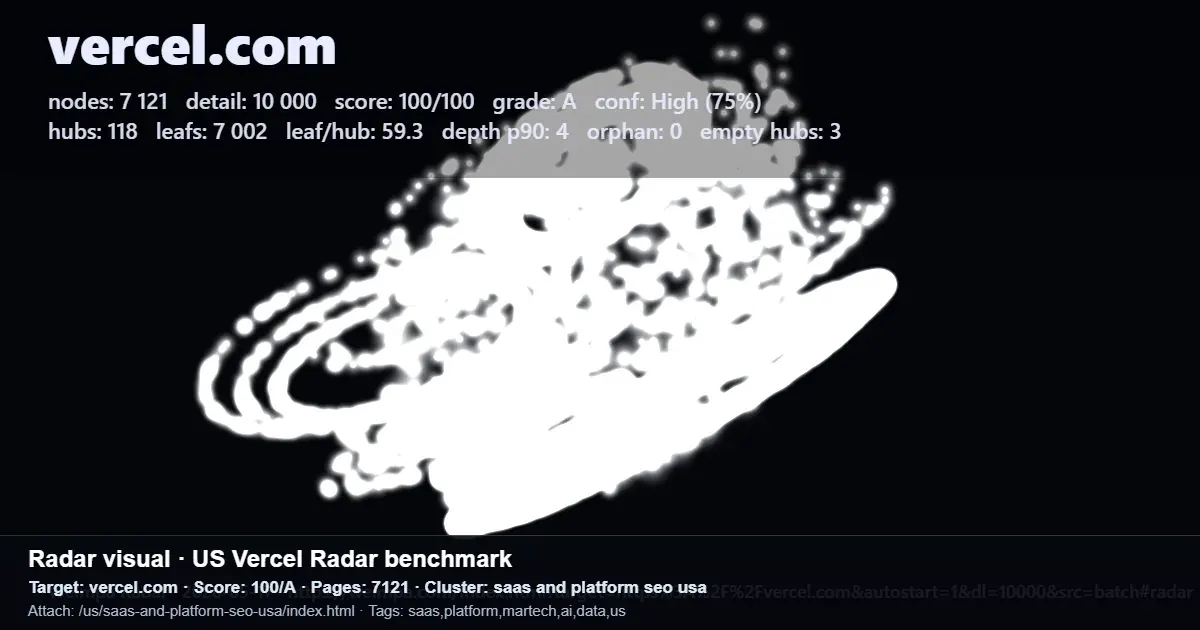
What this page covers
Seomatic alternative done for you
Want a Seomatic-style setup but prefer the strategy and structure handled for you? Radar focuses on diagnosing and mapping your existing site so you can design scalable SEO architectures with confidence before you automate anything.
Instead of blindly spinning up templates, you use Radar to visualize how hubs, leaves, and clusters look today, then decide where a managed, programmatic rollout would have the most impact for search discovery and AI understanding.
In brief
- See where programmatic SEO would actually help
- Radar maps your existing hubs, leaves, and clusters so you can see where structure is missing or thin before you launch any templates or automation.
- Use Radar alongside tools like Seomatic
- Instead of guessing at URL patterns, you import or crawl a snapshot, validate the map, and then decide where a managed, done-for-you rollout makes sense.
What to do
If you like the idea of Seomatic-style automation but want strategy, structure, and quality control handled, Radar gives you the missing diagnostic layer. You start by running the Free Demo or importing a JSON snapshot of your site. Radar maps your current hubs, leaves, and clusters so you can spot missing hubs, orphan leaves, and thin topic groups before you launch any large-scale templates.
Once you see how your site actually looks to search and AI, you can decide where a structured hub/leaf rollout would have the most impact. Share the map with SEO, content, and dev teams to align on one architecture instead of fragmented experiments.
When you need higher limits, AI interpretation, and support for larger builds, you can move into paid tiers designed for ongoing monitoring and managed, programmatic SEO work, or pair Radar with a done-for-you build handled by your team or a partner.
What to keep in mind
Radar is built for teams that want scalable SEO but are cautious about low-quality, template-driven pages. It does not generate content or push changes to your CMS; it focuses on diagnostics and architecture so you can keep quality control in-house or with a trusted partner.
There are a few constraints to know up front. Radar does not scan sites behind logins, paywalls, or aggressive bot protection. In those cases you use JSON import to visualize a URL snapshot you provide. Free Demo runs are capped, so if you need to analyze larger sites, compare two properties, or add AI interpretation, you will need one of the higher tiers.
Radar is a strong fit if you want to compare Seomatic-style automation with a managed 1,000+ page build and monitoring process, validate where hub/leaf structures will help discovery, and coordinate developers, content, and SEO around a single plan. It is less suited if you only need a plug-and-play meta tag tool or a small, static site with no plans for programmatic expansion.