
Seo page architecture for saas
What this page covers
Seo page architecture for saas
SEO/GEO Community US focuses on website structure, hub/leaf architecture, and search demand coverage, which are all core to SEO page architecture for SaaS. This page explains how the right structure can turn a SaaS site into a durable inbound layer.
Instead of publishing more generic content, the goal is to design hubs and pages so they are discoverable, indexable, and aligned with real SaaS search demand. That architecture then supports buying committees and turns qualified search into conversations with your team.
In brief
- Design around real SaaS search demand
- Strong SEO page architecture for SaaS starts with mapping high-intent queries by industry, role, use case, and geography, then turning them into hubs and leaves instead of one-off blog posts.
- Make structure visible to Google and AI search
- Use clean hub/leaf architecture, internal linking, and high-quality sitemaps so crawlers can see your product, pricing, and use-case pages and route qualified traffic straight into buying journeys.
What to do
For SaaS, SEO page architecture is less about isolated keywords and more about how your entire site reflects real demand. Start by scanning your public website to see which hubs and leaves are already visible, where discovery is blocked, and which core journeys are missing. Then map US search demand across industries, buyer roles, and scenarios, and design hubs such as solutions, industries, use cases, and integrations with consistent URL patterns and on-page structure.
Each hub should link to focused leaf pages that answer one concrete question or scenario: a specific vertical, role, problem, or workflow. Internal links, breadcrumbs, and sitemaps must make this graph obvious to Google and AI-powered search so they can surface the right page for each query. Instead of publishing more generic content, you build an evidence-backed search layer: structured Q&A pages, programmatic variants where demand is large, and clear navigation that supports buying committees from first query to product evaluation.
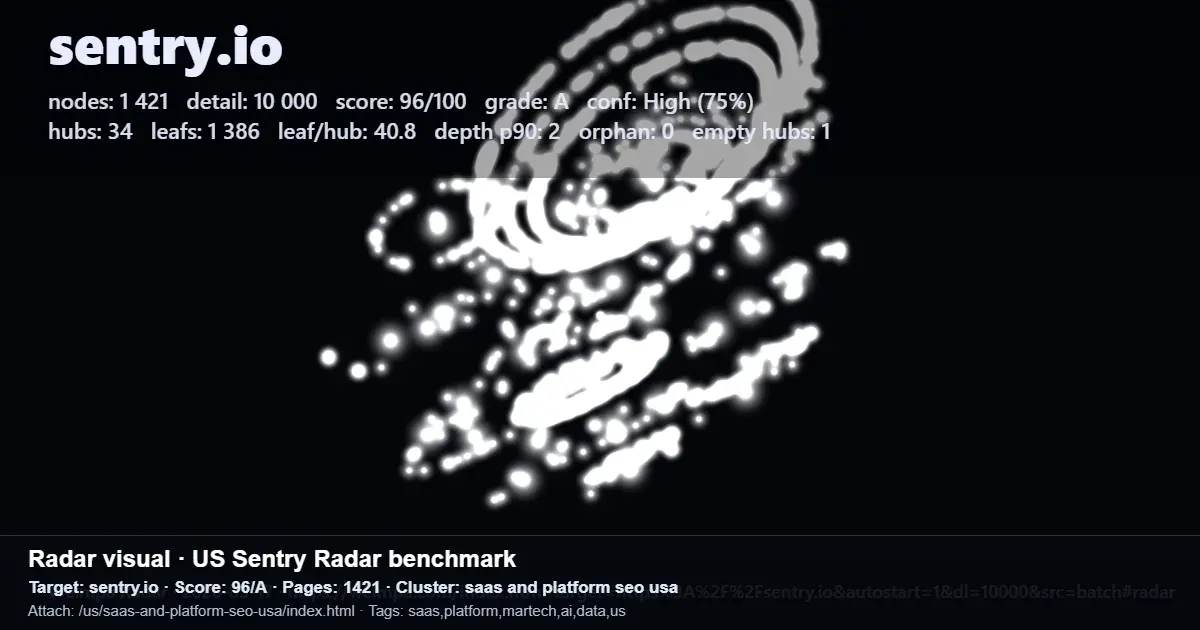
Radar is the first step in this process. It scans your public site, visualizes the website graph, and highlights weak entry points, missing hubs, and leaves that are hard to discover. Based on that, 1000&1 Pages helps plan and deploy the missing search layer: demand mapping, hub/leaf page planning, internal linking, sitemap submission, and growth monitoring. The result is a durable inbound layer that compounds over time instead of a scattered set of landing pages.
What to keep in mind
SEO page architecture works best when there is clear, recurring search demand you can map across states, cities, industries, and buyer roles. If your SaaS is extremely niche with almost no search volume, you will still benefit from better structure, but most growth will come from sales and partnerships rather than organic search.
This approach is not about publishing as many pages as possible. Low-quality, thin, or duplicative programmatic pages increase content risk and can weaken your domain. Each hub and leaf must answer a real question, be indexable, and fit into a coherent internal linking graph; otherwise it becomes a weak entry point that confuses both users and crawlers.
Radar and the surrounding services focus on public websites. If key parts of your product are gated behind logins or heavy JavaScript, they will not be directly scannable and must be represented by separate, crawlable pages. Teams that cannot adjust their information architecture, templates, or sitemaps will see limited impact, because structural issues often sit deeper than copy alone. Results also depend on technical hygiene: robots.txt, meta robots, sitemap quality, and click depth from the homepage all shape how your architecture performs in search.