
Safe programmatic seo planning
What this page covers
Safe programmatic seo planning
Safe programmatic SEO planning starts with honest diagnostics, not big promises. Radar focuses on analyzing your site structure for Google and AI search so you can design scalable pages without relying on inflated rank graphs or fragile shortcuts.
Because Radar is a diagnostics and planning tool, outcomes always depend on how you execute and on your competitive landscape. Use it to see where your structure is strong or weak, then plan programmatic expansions that stay realistic, sustainable, and aligned with real demand.
In brief
- Start with diagnostics: base programmatic SEO plans on real site-structure data instead of chasing short-term ranking spikes or cosmetic metrics that can change overnight.
- Treat tools as planners, not magic levers: Radar highlights opportunities and risks, but final results depend on your content quality, implementation, and competitors.
- Plan for cost and stability: as rank tracking and infrastructure get more expensive, focus on fewer, better-structured pages instead of aggressive, risky page factories.
What to do
Safe programmatic SEO planning means using data to decide where to scale, not just how much to scale. Radar provides site-structure diagnostics for AI and Search, helping you understand hubs, leaf pages, depth, and overall architecture before you roll out large batches of new URLs. This shifts planning from guesswork to a measured, structural view of your domain.
The broader SEO tool landscape is changing: infrastructure for frequent rank checks is getting more expensive, and some tools may reduce checks or disappear. In this environment, relying on constant real-time rank tracking becomes risky and costly. A safer approach is to accept that graphs may look less flattering while your underlying data becomes more honest, and to use that honesty as the basis for programmatic planning.
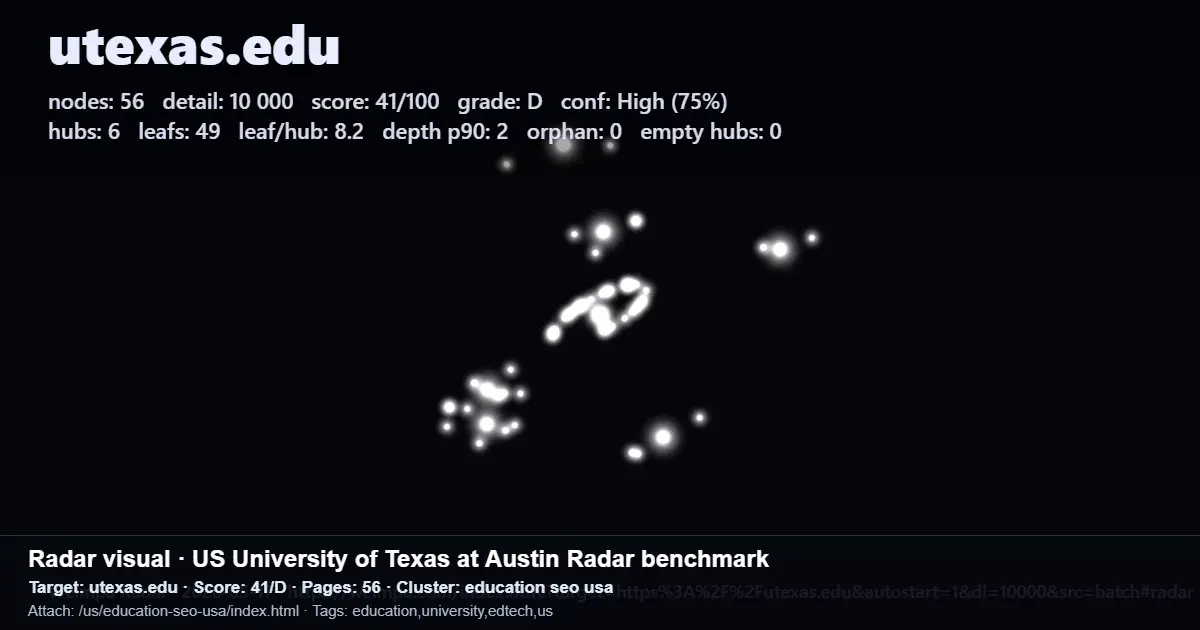
With Radar benchmarks, you can see how a site in a given cluster is structured, including hubs, leaf counts, and depth. This kind of overview helps you decide where additional programmatic pages make sense and where they would only add noise. Instead of chasing perfect-looking charts, you plan around structural scores and realistic grades, aiming for durable visibility rather than short-lived, inflated numbers.
What to keep in mind
Radar does not guarantee rankings or traffic. It is explicitly a diagnostics and planning tool, so any programmatic SEO plan you build from it will still depend on execution quality, content relevance, and how strong your competitors are. Safe planning means acknowledging this uncertainty instead of expecting automatic growth from tooling alone.
The future of some SEO tools is under pressure as infrastructure costs rise. Real-time rank tracking can become an unaffordable luxury, and subscription prices or check frequencies may change. In practice, this means safe programmatic SEO should lean less on constant position monitoring and more on solid site architecture and measured, data-informed rollouts.
Honest data can make your reports look worse in the short term: graphs may drop when tracking becomes stricter or more realistic. For safe programmatic SEO planning, this is a feature, not a bug. It helps you avoid building thousands of thin or misaligned pages just to satisfy vanity metrics, and instead focus on structures and page sets that can earn a sustainable score and fit within your market’s education, ecommerce, or other relevant clusters.