
Programmatic seo for real estate platforms
What this page covers
Programmatic seo for real estate platforms
Programmatic SEO for real estate platforms means building a structured search layer that can expose thousands of metro, city, neighborhood, and listing pages to Google and AI-powered search instead of relying only on paid acquisition.
SEO/GEO Community US helps US real estate platforms turn this structure into qualified inbound demand by mapping search demand, planning hubs and leaves, and fixing crawl, indexing, and internal linking issues surfaced by Radar scans.
In brief
- Programmatic SEO uses a hub and leaf architecture so real estate platforms can cover high-intent searches across states, cities, metros, neighborhoods, and property categories at scale.
- Radar scans show how your current site is structured, which hubs and listing pages are visible, and where crawl, indexing, sitemap, or robots settings are blocking discovery.
- When Radar finds structural gaps, 1000&1 Pages helps design and deploy the missing search layer so more of your inventory becomes strong, indexable entry points for organic and AI-powered search.
What to do
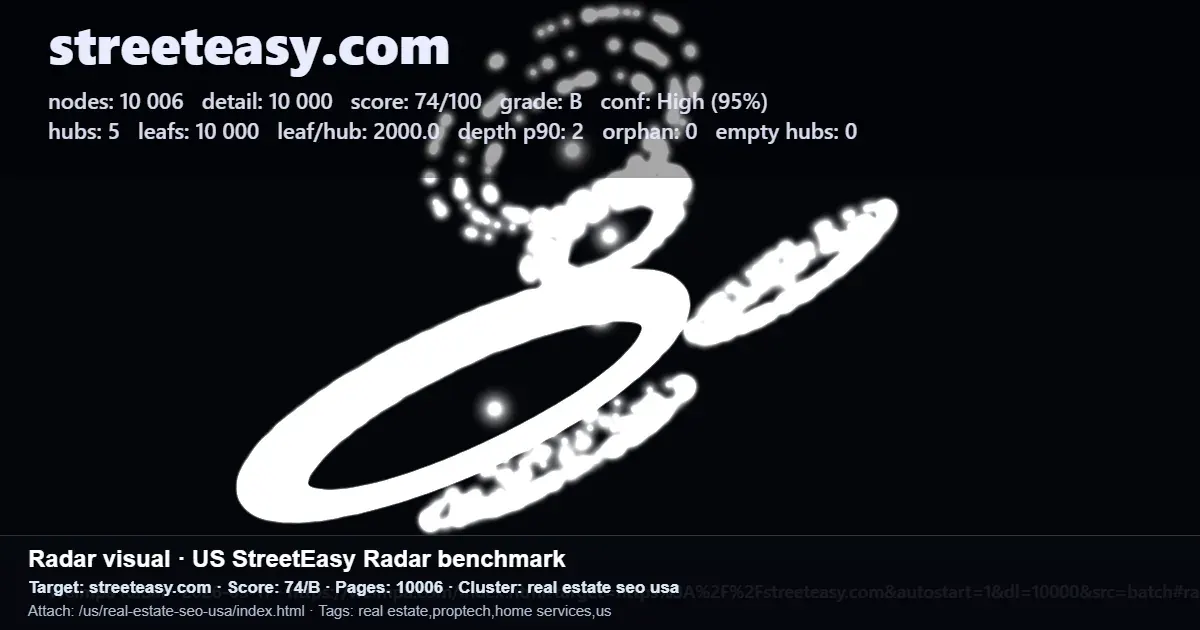
For real estate platforms, programmatic SEO starts with a clear view of your existing website graph. Radar runs a public structure scan, visualizes hubs and leaves, and highlights weak entry points, outdated sitemaps, and robots settings that limit how search engines see your inventory and metro coverage.
Using these diagnostics, 1000&1 Pages helps you build or repair the search layer: mapping US demand across metros and property scenarios, planning hub and leaf pages, and aligning internal linking so important property and category pages are easier to crawl and index. The focus is on high-intent demand, not generic content volume.
Real estate benchmarks such as RE/MAX and BuildZoom show that large, well-structured sites can support thousands of pages across hundreds of hubs. Programmatic SEO for your platform follows the same principle: a consistent hub and leaf architecture, clean access for crawlers, and evidence-backed pages that answer real buyer and seller questions and feed qualified conversations.
What to keep in mind
Programmatic SEO is most effective for real estate platforms, marketplaces, and proptech sites that already have significant inventory and many metro or category pages. If you only operate a small brochure site with a handful of listings, a full search-layer buildout may be less relevant than basic on-page work.
Property marketplace SEO leads often struggle with large inventories that are hard to crawl, inconsistent city and metro hubs, weak internal linking, and limited visibility into which metros have strong versus weak search demand coverage. Radar is designed to surface these structural issues so they can be addressed in a systematic way.
Results depend on your current architecture, technical constraints, and ability to implement changes surfaced by Radar. The goal is to create a measurable inbound layer for the US market: pages that are discoverable, aligned with real search demand, and capable of supporting buying committees, not to promise specific rankings or traffic numbers.