
Seo demand mapping by city and industry
What this page covers
Seo demand mapping by city and industry
Map SEO demand across US cities and industries so your site structure reflects the locations, markets, and buyer scenarios people actually search for.
Radar shows how your public website is structured today. 1000&1 Pages can then help plan missing hubs, leaf pages, Q&A pages, internal links, sitemap submission, and growth monitoring.
In brief
- SEO demand mapping by city and industry helps teams prioritize US location and vertical coverage instead of publishing generic pages without a clear search structure.
- A Radar scan shows visible pages, hubs, leaves, weak spots, sitemap and robots access checks, and places where discovery may be blocked or structurally weak.
- When deep pages have no clear navigation path, the practical fix is to add breadcrumbs and related links inside the right city, industry, or demand cluster.
What to do
For US growth teams, SEO leads, agencies, marketplaces, SaaS companies, franchise networks, and other multi-page businesses, city and industry demand can quickly become hard to manage. The goal is to build a measurable inbound layer, not just publish more generic content.
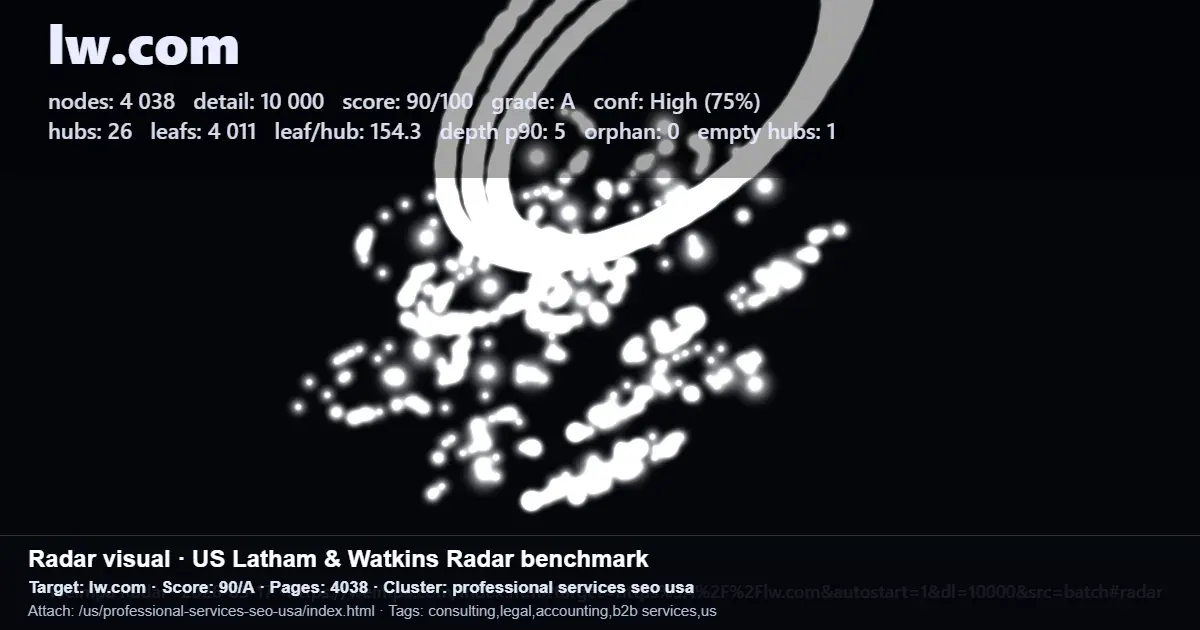
Radar starts with your public website structure. It tries to find sitemaps through robots.txt, reads sitemap URLs, and builds a graph. If sitemap discovery fails, it falls back to a shallow crawl within fair use limits, giving teams a practical view of pages, hubs, leaves, and weak spots.
When the diagnostic shows structural gaps, 1000&1 Pages helps build the missing search layer: US demand mapping, hub and leaf page planning, evidence-backed Q&A pages, internal linking, deployment, sitemap submission, and growth monitoring. For city and industry SEO, that means turning mapped demand into clearer page architecture.
What to keep in mind
This approach fits teams that need qualified inbound demand from Google and AI-powered search across US states, cities, metros, industries, buyer roles, and business scenarios. It is especially useful when a site already has many pages but weak hub and leaf organization.
Common problems include city, role, salary, employer, or industry pages that are indexed but fragmented, long-tail demand that combines location and vertical, and internal concern about thin or duplicate content across many similar pages. Mapping demand first helps decide which stable pages and clusters deserve attention.
There are limits. Radar works from publicly accessible pages, sitemap discovery, robots access checks, and shallow crawling when needed, so it should be treated as a structural diagnostic rather than a ranking guarantee. The value is in seeing what is discoverable, what is blocked, and what should be fixed first.