
Search intent mapping for b2b seo
What this page covers
Search intent mapping for b2b seo
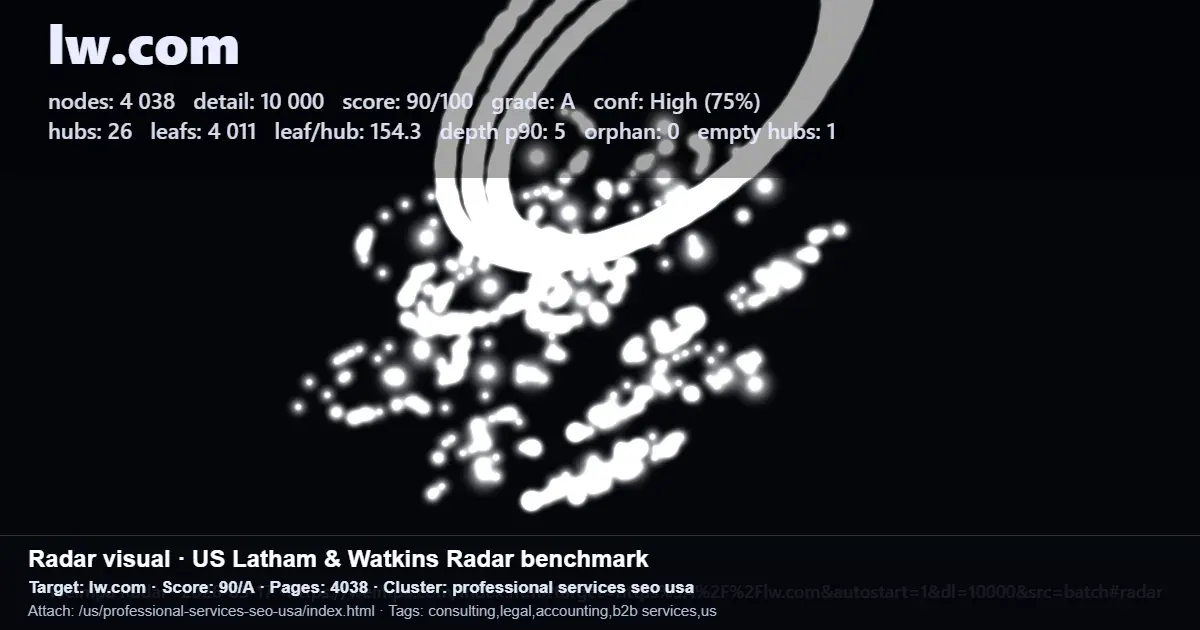
Search intent mapping for B2B SEO is most useful when it starts with the structure your site already has. Radar checks robots.txt, looks for sitemaps, reads sitemap URLs, and turns discovered pages into a site graph.
If sitemap discovery is limited, Radar uses a shallow crawl within fair use limits. The output helps you review page depth, navigation paths, and how related intent clusters connect.
In brief
- Use search intent mapping to connect B2B SEO topics to the pages, hubs, and internal paths already present on your site.
- Radar is a diagnostic and planning tool. It helps uncover structural issues, such as important pages that sit too deep or lack clear navigation paths.
- Results depend on execution and competition. Radar can guide improvements, but it does not guarantee rankings, traffic, or lead volume.
What to do
Start by letting Radar discover your site structure. It checks robots.txt for sitemaps, reads sitemap URLs, and builds a graph of the pages it can access so you can see how your B2B SEO content is organized.
Use the graph to find intent pages that are buried too deep, missing a clear path from stronger pages, or disconnected from related content in the same cluster. These gaps can make demand mapping harder to use because valuable pages are not easy to discover or navigate.
The best next steps are structural and testable. Add breadcrumbs where deep pages need a path back, strengthen related links within clusters, and clarify hub-to-page relationships. Radar provides the diagnostic view; your implementation determines the impact.
What to keep in mind
Search intent mapping for B2B SEO should be treated as a planning workflow, not a performance promise. Radar helps you inspect how pages, hubs, and internal links are arranged before you decide what to change.
Coverage depends on what Radar can access. It tries sitemap discovery first and uses a shallow crawl when needed, within fair use limits. That makes it useful for structure diagnostics, but it should not be treated as a complete technical crawl in every case.
Radar does not guarantee rankings, traffic, or demand results. It is a diagnostics and planning tool, and outcomes depend on execution, content quality, site changes, and the level of competition around the queries you target.