
Clinic website seo structure audit
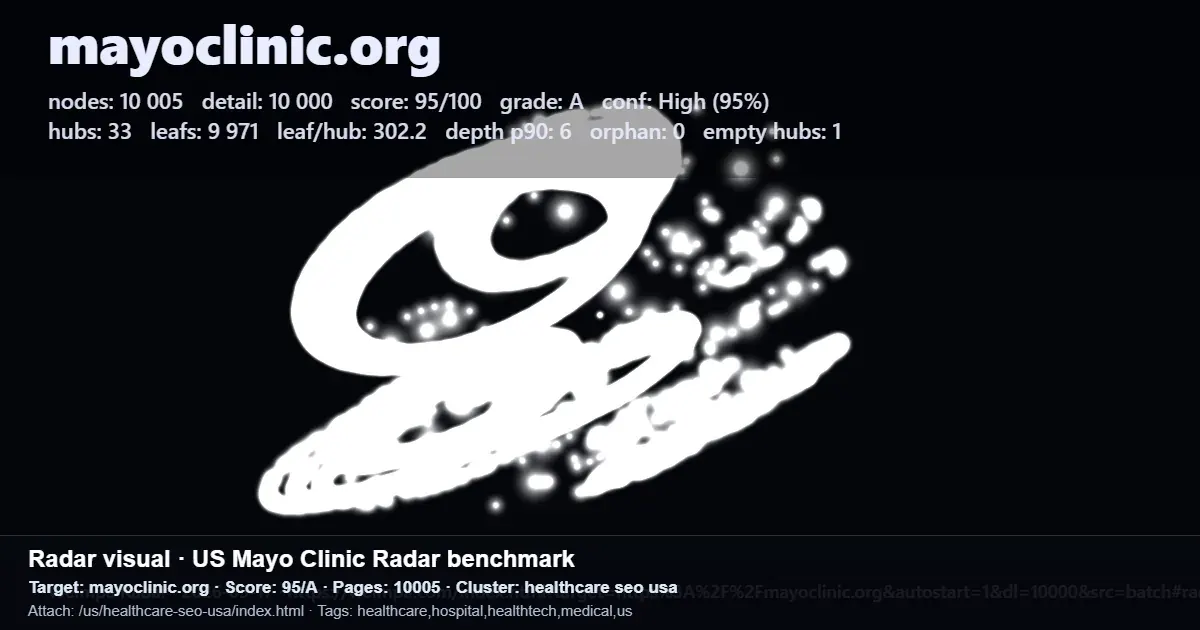
What this page covers
Clinic website seo structure audit
A clinic website SEO structure audit reviews how your site is organized for crawling, navigation, and search demand. It looks at hubs, leaf pages, internal links, sitemap coverage, and click depth.
The audit helps find missing sections, orphan pages, and competitor structure gaps so your clinic site can be planned with less guesswork and clearer hub-to-leaf navigation.
In brief
- Check whether important clinic topics are supported by dedicated hubs or leaf pages instead of being buried in short overview content.
- Review crawlability signals such as sitemap coverage, click depth, internal link distribution, and orphan pages that may weaken discovery.
- Compare your structure with competitor section URLs or sitemaps to find missing topics and prioritize practical structure fixes.
What to do
A clinic website SEO structure audit starts by mapping the current site architecture. The review looks at main sections, supporting leaf pages, sitemap coverage, click depth, and internal link distribution to see whether important pages are easy for search engines and visitors to reach.
The audit can include a competitor structure review. By checking competitor section URLs or sitemap patterns, it becomes easier to identify topics they cover with dedicated pages that your site may only mention briefly or not address at all.
The output is a practical structure fix list. Common actions include improving sitemap coverage, reconnecting orphan pages, normalizing hub-to-leaf navigation for priority clusters, and adding missing hubs or leaf pages where search demand and competitor gaps support the need.
What to keep in mind
This audit is about website structure, not medical advice or clinical quality. It evaluates how existing pages are grouped, linked, and exposed for crawling and navigation, using established SEO audit checks rather than making claims about care outcomes.
Competitive comparisons are useful for gap discovery, but they should not be treated as a copy plan. If another site has a full section for a topic your clinic covers briefly, that may indicate a structural opportunity to review, not a guarantee of performance.
Results depend on the quality and completeness of the current site. A structure audit can flag missing hubs, weak leaf coverage, orphan pages, and navigation issues, but new or revised medical content still needs appropriate review before publication.