
Website structure audit
What this page covers
Use this website structure audit hub to choose the right way to review how a public site is organized across its URLs.
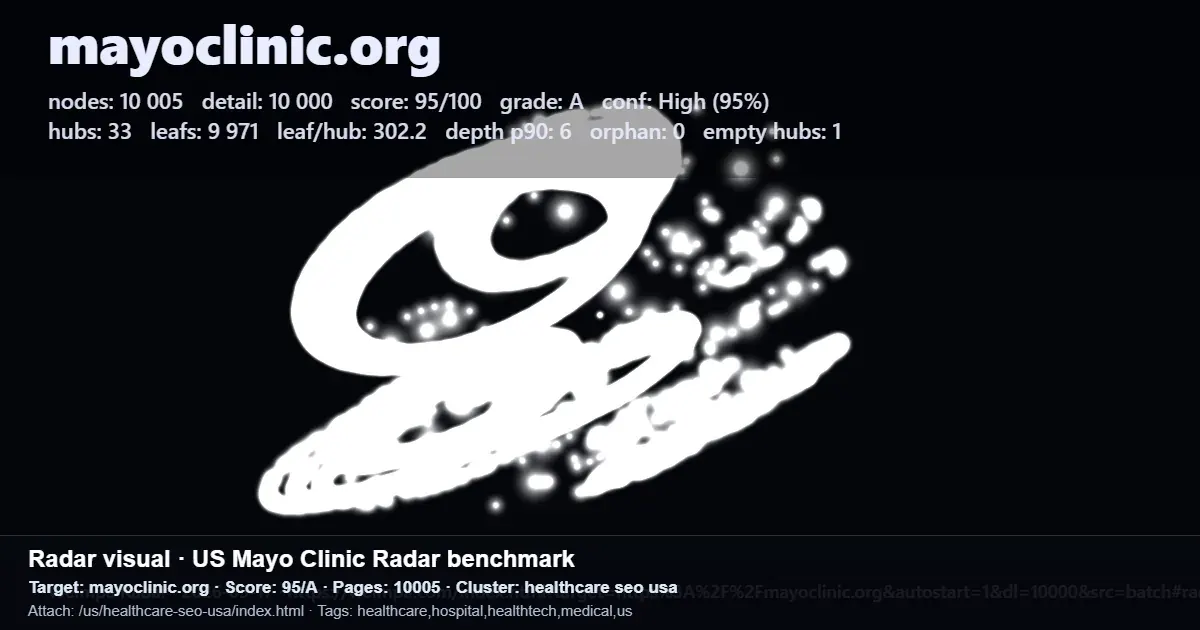
Radar maps URL structure into home, hub, and leaf page patterns. Demo output can include a share link, a PNG share card, and a basic public scans feed.
Each run supports up to 1,000 pages. Coverage depends on public sitemaps and shallow crawl signals, and Radar does not bypass protected or blocked sites.
What to choose
- Choose a general website structure audit when you need a clear map of public URLs grouped into home, hub, and leaf page patterns.
- Choose an SEO, website architecture, graph visualization, or pre-production audit page when your focus is structure before deeper content work.
- Choose an industry page when you want the audit framed for accounting, clinics, fintech, healthcare, law, real estate, SaaS, or marketplaces.
Where to go next
The pages below narrow website structure audit work into focused paths, including SEO structure audits, website architecture audits, graph visualization, and site structure review before content production.
You can also use related resources such as a structure audit report template, an SEO site structure checklist, a technical SEO comparison, and a checklist for search and AI discovery.
What matters
- Radar demo output includes a URL structure map that separates home, hub, and leaf page patterns.
- Each run supports up to 1,000 pages, with coverage based on public sitemaps and shallow crawl signals.
- Radar does not add AI interpretation and does not bypass protected or blocked sites.