
Law firm website seo structure audit
What this page covers
Law firm website seo structure audit
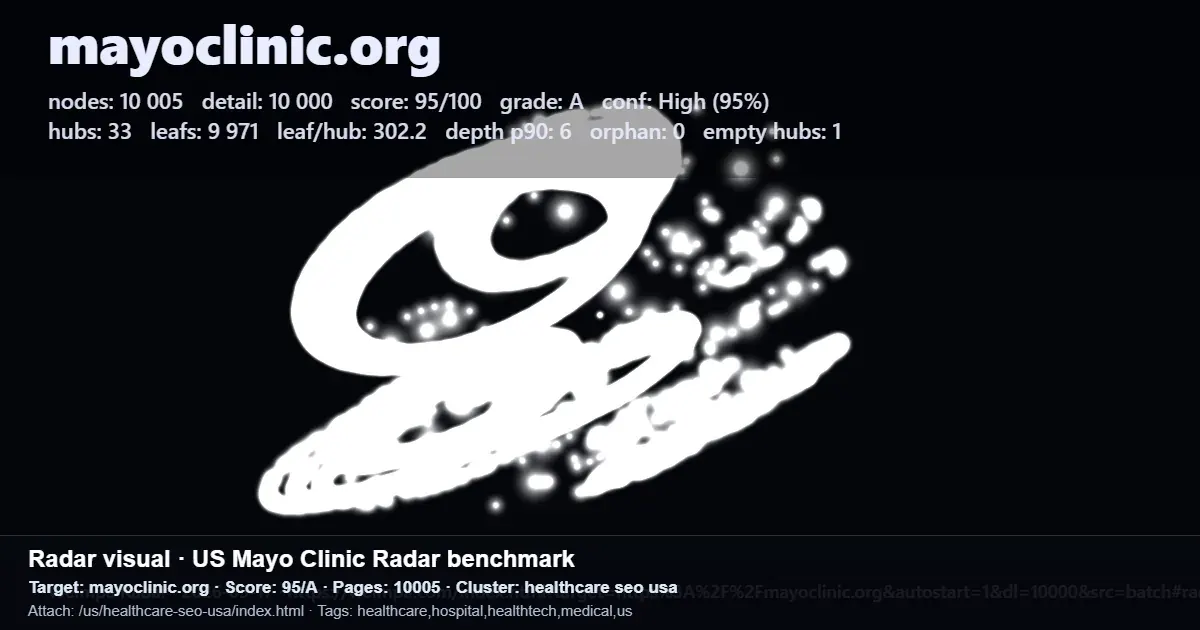
Use Radar to map a law firm website’s SEO structure and see whether hubs, practice area clusters, and disconnected pages are clear in one view.
Scan a real site, review the structure, and share the result with a teammate or client when the map is clear enough to understand without a meeting.
In brief
- A law firm website SEO structure audit checks how URLs are organized and whether clear hubs and practice area leaf clusters are present.
- Radar helps you scan a real site and spot structure issues, including pages that look disconnected, buried, or hard to explain.
- If crawling is blocked by access controls, paywalls, logins, or anti-bot protections, you can import your own JSON snapshot.
What to do
Start with a Radar scan of the law firm website you want to review. The goal is to make the URL structure visible so you can confirm that the site has sensible hubs, clear practice area clusters, and no obvious disconnected sections.
Use the map as a practical review tool, not a long report. If a teammate, partner, or client can understand the structure without a meeting, the output is doing its job. You can share the link or save a PNG card for review.
For larger audits, Radar supports runs up to 20,000 pages. AI interpretation is included, two-site comparison is available on one screen, and JSON import is available when crawling is blocked and you provide the snapshot.
What to keep in mind
Radar does not bypass access controls, paywalls, logins, or anti-bot protections. If parts of a law firm website cannot be crawled, those areas need to be supplied through a snapshot for visualization.
The audit is best used to verify the structural basics: hubs exist, leaf clusters exist, and important pages do not appear randomly disconnected. It is a structure review, not a guarantee of rankings or outcomes.
Two-site comparison can help when you need to review structures side by side. Use it to compare a current site with another version or another site while keeping the discussion focused on visible URL architecture.