
Seo website structure audit
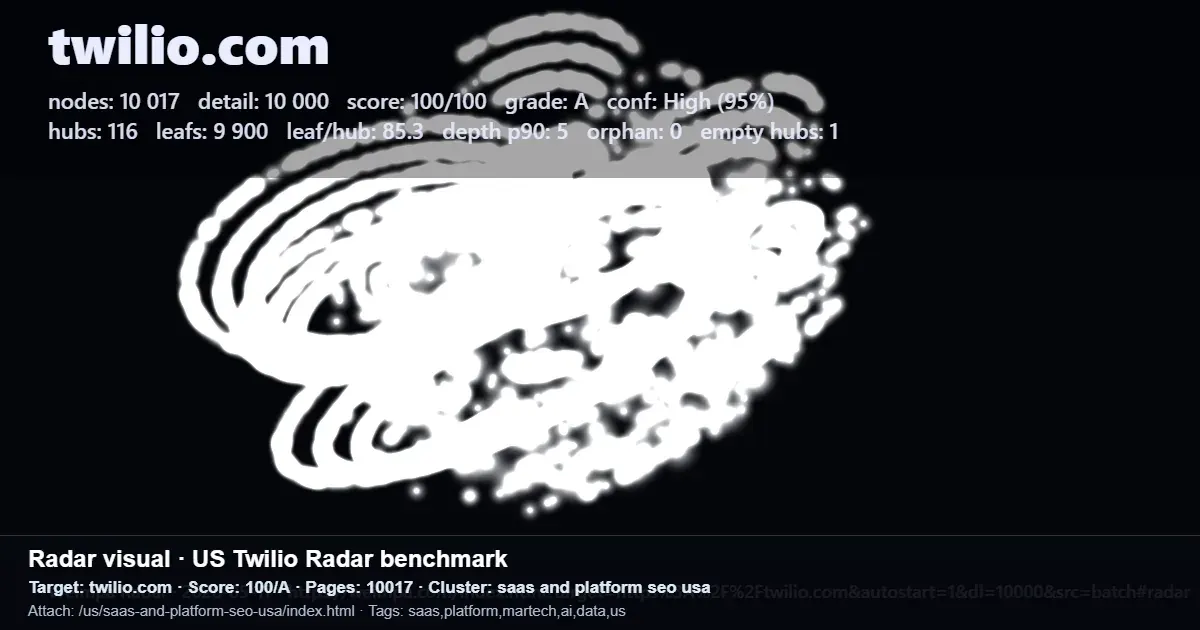
What this page covers
Seo website structure audit
Use Radar to map your SEO website structure and see how hubs, leaf pages, and content clusters connect across a real public site.
Review the scan to check whether the architecture is clear, key clusters are visible, and important pages are not isolated or hard to discover.
In brief
- Run a Radar scan on a real site to visualize URL structure, hubs, leaf clusters, and disconnected areas in one structure map.
- Check whether the architecture is easy to follow: hubs should be present, leaf clusters should be coherent, and priority sections should not sit alone.
- Share the scan link or save a PNG card so a teammate, client, or stakeholder can understand the structure without a long walkthrough.
What to do
An SEO website structure audit should start by making the current architecture visible. Radar scans a real public site and maps how URLs relate to hubs and leaf clusters, giving you a practical view of how the site is organized.
Once the scan is complete, use the map to confirm that hubs exist, related pages are grouped logically, and no important section appears randomly disconnected. The output is most useful when someone outside the original planning process can understand the structure quickly.
For larger reviews, Radar can raise the scan cap to 20,000 pages per run. AI interpretation is included, two-site comparison can be viewed on one screen, and JSON import is available when crawling is blocked and you can provide your own snapshot.
What to keep in mind
Radar is built to visualize website structure, not to bypass restricted areas. The demo does not bypass access controls, paywalls, logins, or anti-bot protections, so blocked sections may require another input method.
If crawling is blocked, Early Access supports visualizing your own snapshot through JSON import. That keeps the structure review possible when you can provide site data instead of relying on a direct crawl.
The same audit workflow can apply to many site types, including clinic and law firm website SEO structure audits. The key requirement is a real crawl or a provided snapshot that can be mapped and reviewed.