
B2B SaaS Growth Lead
What this page covers
B2B SaaS Growth Lead
If you lead growth for a B2B SaaS company, you may be turning broad product messaging into pages that match how CMOs, RevOps teams, founders, SEO leads, and product marketers actually search.
A careful first step is to use Radar to see where your site may be missing role-based pages, guide paths, internal links, or CTA-ready routes before you invest in more content.
In brief
- You may need a clearer map of buyer-role pages, B2B guides, hubs, leaf pages, internal links, and CTAs that connect search demand to specific SaaS visitors.
- Role-based pages and guide formats may help when your current messaging feels too generic or when important role queries do not land on dedicated, relevant pages.
- Before you build, check whether each role has distinct intent, whether the structure avoids duplication, and whether the CTA fits the visitor’s research path.
What to do
As a B2B SaaS growth lead, your task is probably not just to publish more pages. It is to decide which roles, guides, hubs, and leaf pages deserve attention when product-led messaging is too broad for specific buyers.
Useful formats may include lead-generation guides with clear CTAs, B2B strategy guides for “what is [tech]” demand, role-based pages for decision-makers, and headline testing against search patterns.
A practical start is to benchmark your SaaS site structure in Radar, review hub and leaf coverage, compare visible SaaS and platform SEO examples, and prioritize a small set of role pages before scaling.
What to keep in mind
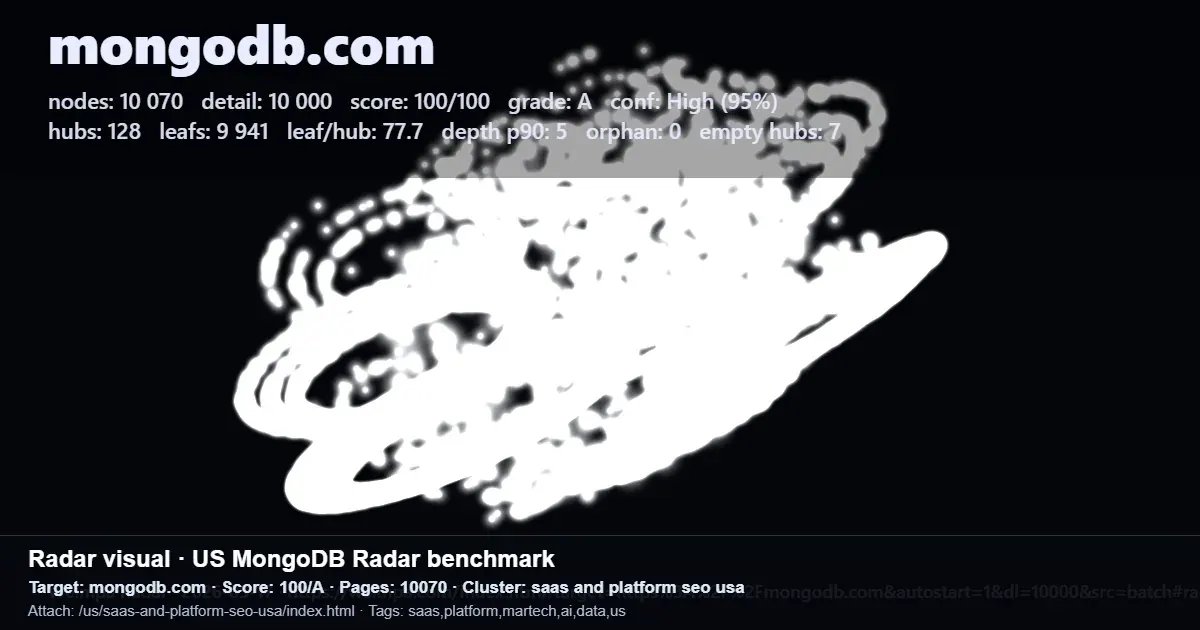
Radar benchmark examples for SaaS and platform SEO include large sites such as Elastic and MongoDB, each shown with about ten thousand pages plus hub and leaf structures. That can make structure easier to inspect, but it does not define the right footprint for every SaaS company.
This is not a ranking guarantee and should not replace your own demand review. Role-based pages can become repetitive if CMOs, RevOps teams, founders, SEO leads, and product marketers receive the same message without a distinct path or CTA.
This next step makes sense if you need a grounded view of under-served roles, guide topics, internal links, CTAs, and the gap between generic SaaS messaging and buyer-specific pages.