
Search-layer pilot readiness checklist
What this page covers
Search-layer pilot readiness checklist
Use this checklist before a US search-layer pilot, especially if you plan to test practice, industry, location, or buyer-question pages before scaling.
A ready pilot has a clear scope, a Radar view of the current site structure, and intent mapping so new pages do more than repeat generic SEO copy.
In brief
- Run a Radar scan first to understand the current page structure, including visible hubs, leaf pages, depth signals, and possible attachment points.
- Choose one controlled pilot scope, such as a US industry, location, service area, or buyer question, instead of trying to cover every opportunity at once.
- Confirm that each planned page has a clear intent role, such as learning, informational search, navigational, research, conversational, or content-filtered demand.
What to do
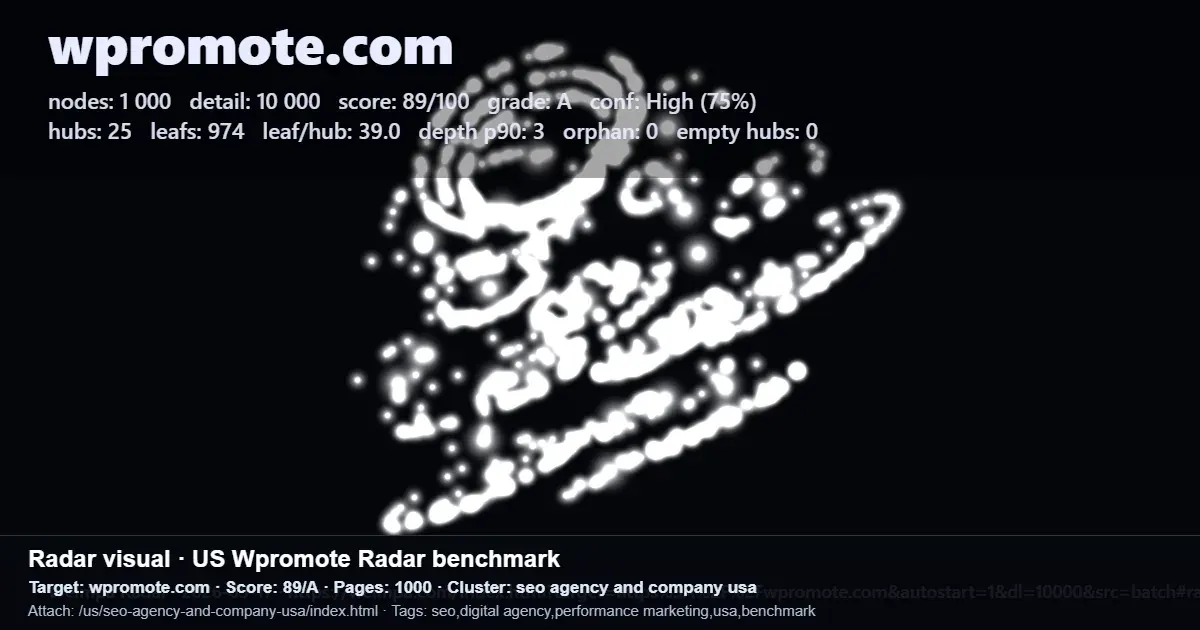
Start with the existing site structure. A Radar benchmark can show the target domain, page count, hub and leaf patterns, depth indicators, and how a proposed search layer would connect to the public website.
Then review the demand plan. For professional services, the pilot should avoid generic practice pages and connect services, industries, locations, and buyer questions in a way that fits real US search scenarios.
Set quality limits before launch. Past low-quality content, misaligned SEO work, compliance concerns, and unnatural link tactics can create risk, so the pilot should be measured and selective rather than treated as mass publishing.
What to keep in mind
This checklist fits teams that want to test a search layer before scaling. The clearest supported use case is a legal, accounting, consulting, or advisory firm evaluating practice and location pages.
It is not a shortcut around weak positioning or thin pages. If existing pages are generic, fail to connect locations to relevant services, or raise tone and compliance concerns, address those issues in the pilot plan.
Search systems classify query intent and may reduce the impact of unnatural link behavior. That makes the readiness check stronger when it focuses on structure, intent, page quality, and controlled expansion.