
Internal link architecture audit checklist for hub-and-leaf sites
What this page covers
Internal link architecture audit checklist for hub-and-leaf sites
Use this checklist to see whether your site has clear hubs, connected leaf clusters, and important pages that are not isolated from the rest of the structure.
A strong audit should make the site easy to understand at a glance. Home, hub, and leaf paths should show how topics and subtopics fit together.
In brief
- Check that each hub gives readers and crawlers a clear introduction, a roadmap to subtopics, and links to the right leaf pages.
- Confirm that every leaf links back to the correct hub and, when useful, to closely related leaves in the same cluster.
- Use descriptive anchor text and a visible home, hub, and leaf URL map to test whether the architecture is clear enough to share.
What to do
Start by mapping the public URL structure into home, hub, and leaf groups. Check whether the main hubs are present, whether their leaf clusters are easy to find, and whether any important pages sit outside the structure.
Then review the link pattern inside each cluster. A hub should link down to its leaves. Each leaf should link back up to its hub. Related leaves can link across when the relationship is useful and contextually relevant. Avoid generic anchor text that does not explain the destination.
Finally, compare the architecture with the coverage model the site needs. If the site must support topics, roles, industries, or US locations, the audit should show whether new pages can be added consistently or whether the current structure will create clutter.
What to keep in mind
This audit is most useful when a growth team needs to know whether its current hub-and-leaf model can scale without ad hoc sections, weak navigation, or pages that do not map cleanly to the topics they support.
It does not replace content planning. Leaf pages still need distinct sub-intents, and hubs still need to orient readers and crawlers with a clear introduction, summaries, and links to the leaf pages they represent.
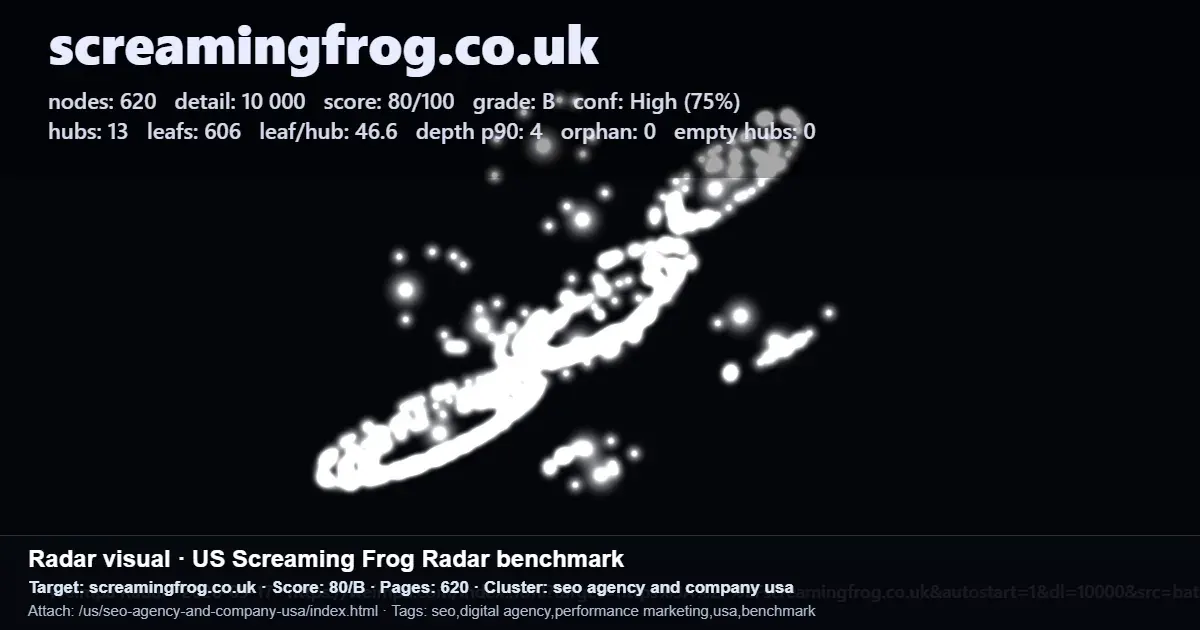
Radar can help validate the structure by scanning a real site, showing a home, hub, and leaf URL map, and making the result easy to share. The demo is capped at 1,000 pages per run.