
Internal linking plan for programmatic seo
What this page covers
Internal linking plan for programmatic seo
An internal linking plan for programmatic SEO makes large sets of templated pages easier for search engines to crawl and understand, while giving users clear paths through your content. Consistent, descriptive anchor text and predictable link patterns help bots recognize what each page is about and how it fits into the site.
When your internal links follow technical best practices for crawlable elements and anchor wording, programmatically generated pages stop being isolated URLs. They become part of a clear site architecture that supports indexing, relevance signals, and navigation at scale across hubs, leaves, and long-tail variants.
In brief
- Implement links in crawlable elements and use concise, descriptive anchor text that reflects the target page topic, following search engine guidance on link and anchor best practices.
- Use internal links to show structure across programmatic pages, improving depth of coverage, hub-to-leaf distribution, and the overall signals that your site is easy to navigate and understand.
- Treat internal linking as an ongoing diagnostic area: track how well your structure exposes important pages, then adjust anchors, placements, and patterns as you expand your programmatic SEO footprint.
What to do
A practical internal linking plan for programmatic SEO starts with technical hygiene. Links should be implemented in elements that search engines can crawl, and each link should use clear, specific anchor text. Search engine documentation stresses that anchor text helps systems understand the destination page, so vague labels are less useful than short phrases that match the page’s topic or intent.
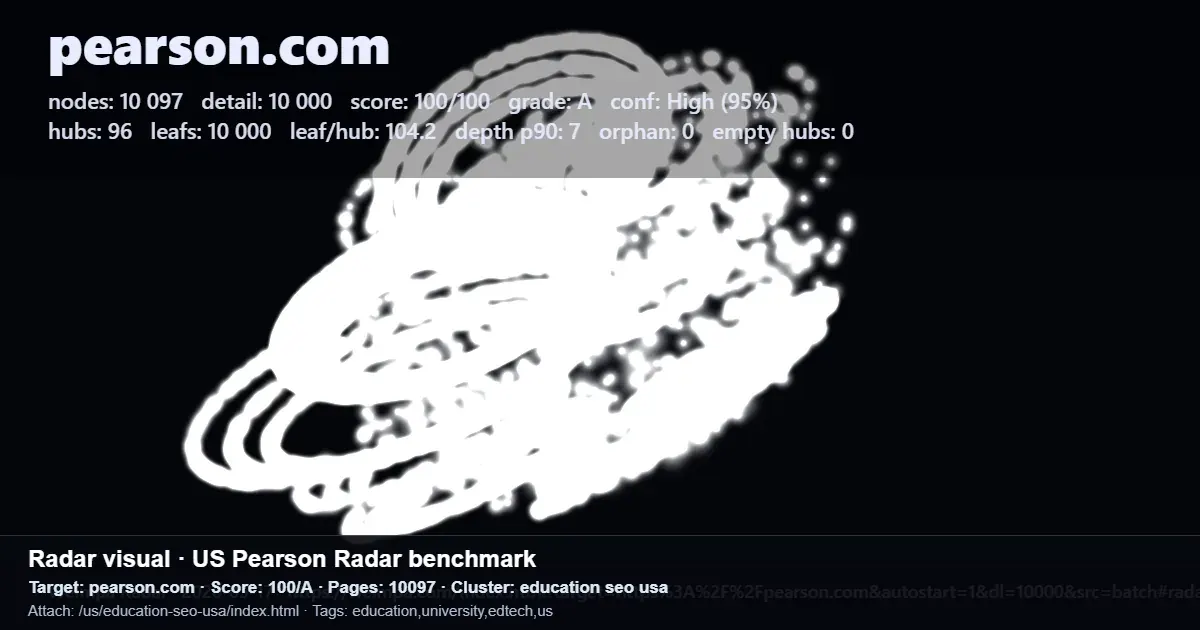
Once links are technically sound, you can use them to express structure across your programmatic pages. A diagnostic view such as a Radar-style score can summarize how well your site covers topics in depth, how hubs connect to leaf pages, and how easily a crawler can move through your URL graph. This makes it easier to see whether your programmatic pages form a coherent hierarchy or just a flat list of similar templates.
Programmatic SEO research often highlights hub-and-spoke design, clustering, and continuous optimization. In that context, internal linking is how you bind large keyword sets and templates into intent-based clusters. As you generate new pages from spreadsheets or other systems, revisiting anchor quality, link density, and placement helps you preserve a stable structure instead of letting the site fragment or create orphan pages over time.
What to keep in mind
An internal linking plan for programmatic SEO has to respect real technical limits. Links need to follow crawlable patterns, anchors should stay readable and relevant, and over-optimized or repetitive wording can reduce clarity. Heavy use of non-crawlable elements or JavaScript-only links can also limit the impact of even a large programmatic build.
In the broader market, many self-serve programmatic SEO tools promote internal linking, sitemaps, and indexing workflows as key features, promising faster discovery of large page sets. This shows that internal linking is often treated as a competitive lever, not just a background detail to handle at the end of a project.
At the same time, some budgets for local or brand growth go into platforms that are not designed for mass programmatic pages. An internal linking plan for programmatic SEO is most valuable when you are intentionally building and maintaining large structured page sets, where crawl paths, hub/leaf balance, and coverage depth directly affect performance.