
Free seo geo radar scan
What this page covers
Free seo geo radar scan
Run a free SEO/GEO Radar scan to see how your public site structure appears for Google search and AI-powered discovery before you invest more time or budget.
The scan is action-oriented. It highlights structural issues to review, such as missing hubs, orphan leaves, and shallow content clusters.
In brief
- Use the free SEO/GEO Radar scan to get a focused view of how your site is structured for search and AI-powered discovery.
- Review practical findings such as missing hubs, orphan leaves, and shallow clusters that may need cleanup or stronger internal linking.
- Radar scans public, crawlable pages. For blocked areas, you can import a JSON URL snapshot that you provide.
What to do
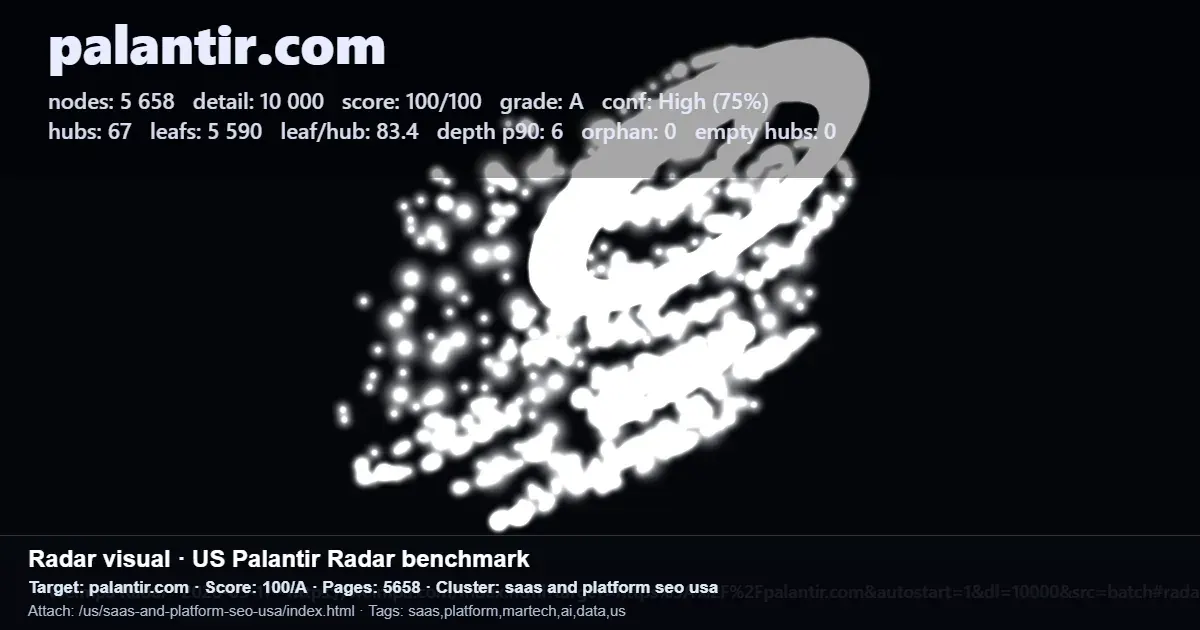
A free SEO/GEO Radar scan gives you a practical way to inspect site structure before making a larger SEO decision. Instead of starting with broad assumptions, you can see how pages, hubs, and clusters are represented in the Radar view.
The scan is designed to end with concrete issues your team can review. Radar can help surface missing hubs, orphan leaves, and shallow clusters, so you can decide where restructuring or internal linking work should start.
Use the scan as a repeatable review pattern with your team. Identify a small set of findings, agree on a small set of fixes, and rescan after changes. This keeps the conversation focused on visible structure instead of vague optimization ideas.
What to keep in mind
Radar works with the public, crawlable parts of a website. It does not scan sections behind logins, paywalls, or aggressive bot protection, so those areas should not be expected in the automatic scan.
If you need to visualize URLs that Radar cannot crawl directly, use JSON import with a URL snapshot you provide. That keeps the review grounded in a defined snapshot without requiring access to protected areas.
The scan is most useful when you want action-oriented structural diagnostics. Use it to surface issues like missing hubs, orphan leaves, and shallow clusters, then rescan to review the structure after fixes.