
SEO/GEO Radar scan
What this page covers
An SEO/GEO Radar scan helps you review how a US website is structured before you choose the next SEO move.
The workflow is simple: scan the site, review the findings, make the first fixes, and rescan so decisions stay tied to visible structure.
Use this hub to choose the right next step, from a free scan to pre-investment checks, PPC comparison, US website review, or 1000&1 Pages pilot preparation.
What to choose
- Choose the free scan page if you want a simple SEO/GEO Radar scan before committing to a deeper workflow.
- Choose the pre-investment or PPC comparison pages if you are deciding whether scan-led SEO work should come before more paid traffic.
- Choose the US website or 1000&1 Pages pilot pages if you need preparation, first fixes, a workflow, or a checklist before starting a pilot.
Where to go next
The pages below cover common Radar scan questions, including a free SEO/GEO Radar scan and a scan focused on a US website.
Other pages explain how to use a Radar scan before SEO investment, compare SEO with PPC, and prepare first fixes, workflow steps, and checklist items before a 1000&1 Pages pilot.
What matters
- The Radar workflow is practical and lightweight: scan the site, turn findings into fixes, then rescan to confirm what changed.
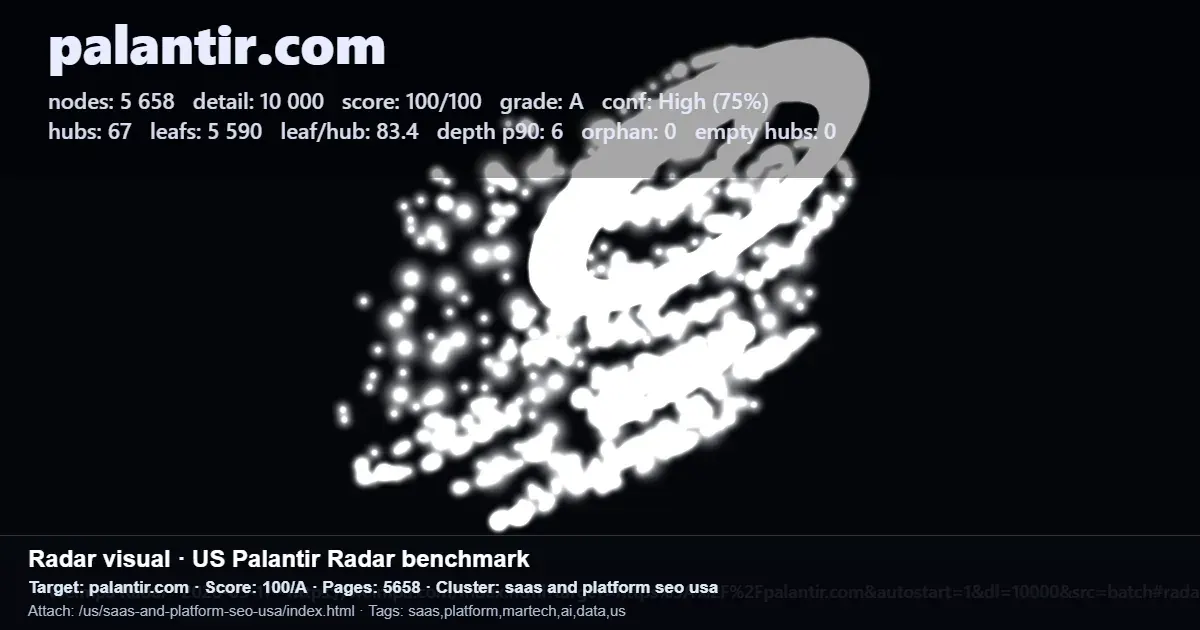
- A Radar benchmark can show structure signals such as pages, hubs, leaf pages, depth, orphan pages, score, grade, and cluster.
- One example US education SEO benchmark shows 76 pages and a 56/C score, so this hub stays focused on scan interpretation rather than broad promises.