
Radar scan before seo investment
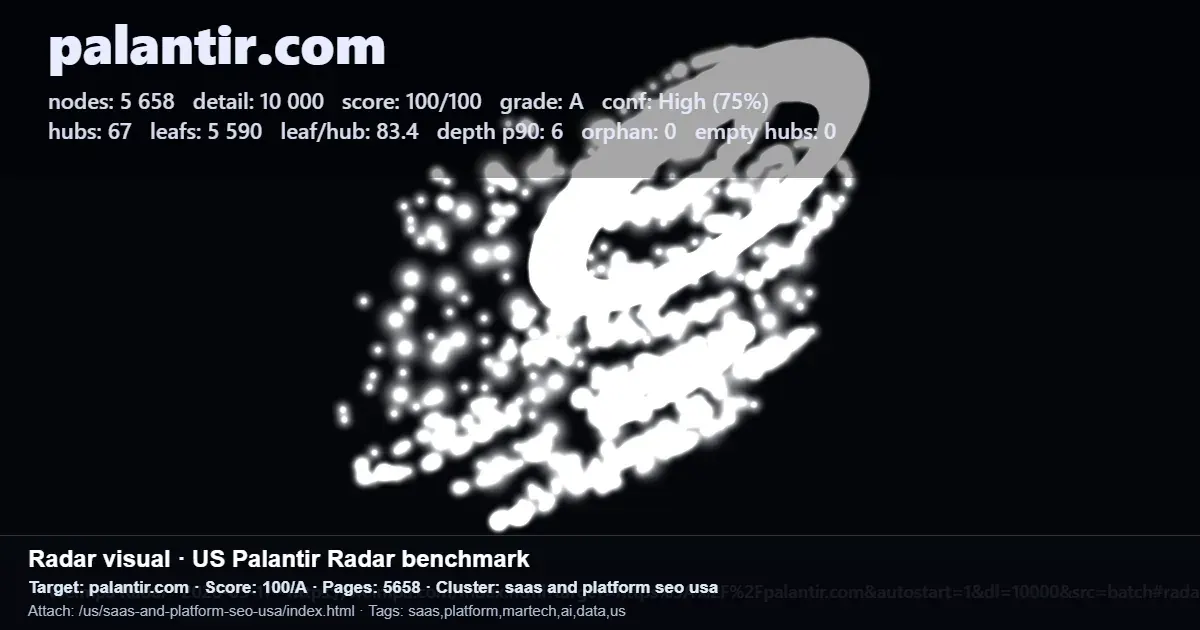
What this page covers
Radar scan before seo investment
Run a Radar scan before you commit budget to SEO, GEO, an agency, a tool, or a large content program. Use it as a low-risk diagnostic of the site you have today.
Radar is built for action. Each scan highlights concrete issues to review, such as missing hubs, orphan leaves, and shallow clusters, so investment decisions start with structure instead of guesswork.
In brief
- Use Radar before a larger SEO or GEO commitment to get an independent structural view of your current site and reduce uncertainty before you spend.
- Base the decision on concrete site issues, including missing hubs, orphan leaves, and shallow clusters that should be reviewed before you scale content or campaigns.
- Set clear expectations: Radar is a structural scan. It does not scan sites behind logins, paywalls, or aggressive bot protection unless you provide a URL snapshot for import.
What to do
Before you renew an SEO contract, compare tools, or fund a large content program, run a Radar scan on the current site. The scan shows how the site is structured for search and AI discovery, with attention to the hubs, leaves, and clusters that organize your topics.
The value is in the action list. Radar is designed so every scan ends with concrete issues to review and fix, including missing hubs, orphan leaves, and shallow clusters. That gives teams a clearer way to decide what should be repaired before more budget goes into SEO or GEO expansion.
A practical workflow is simple: review the scan, choose a focused set of findings, define specific fixes, and rescan after changes. This keeps the conversation grounded in visible structure and makes it easier to explain why some work should happen before a larger investment.
What to keep in mind
Radar is not a promise of rankings, traffic, or inbound growth. It is a diagnostic step that helps teams inspect structural readiness before investing further in SEO, GEO, tools, agencies, or scaled content work.
There are access limits. Radar does not scan sites behind logins, paywalls, or aggressive bot protection. If a site cannot be crawled directly, a JSON import can be used to visualize a URL snapshot that you provide.
This is a strong fit when leadership wants justification before new SEO or content spend, when past investment did not lead to clear inbound growth, or when the team is unsure whether the current site is ready for programmatic SEO or GEO expansion.