
Seo geo radar scan for us website
What this page covers
SEO/GEO Radar scan for a US website
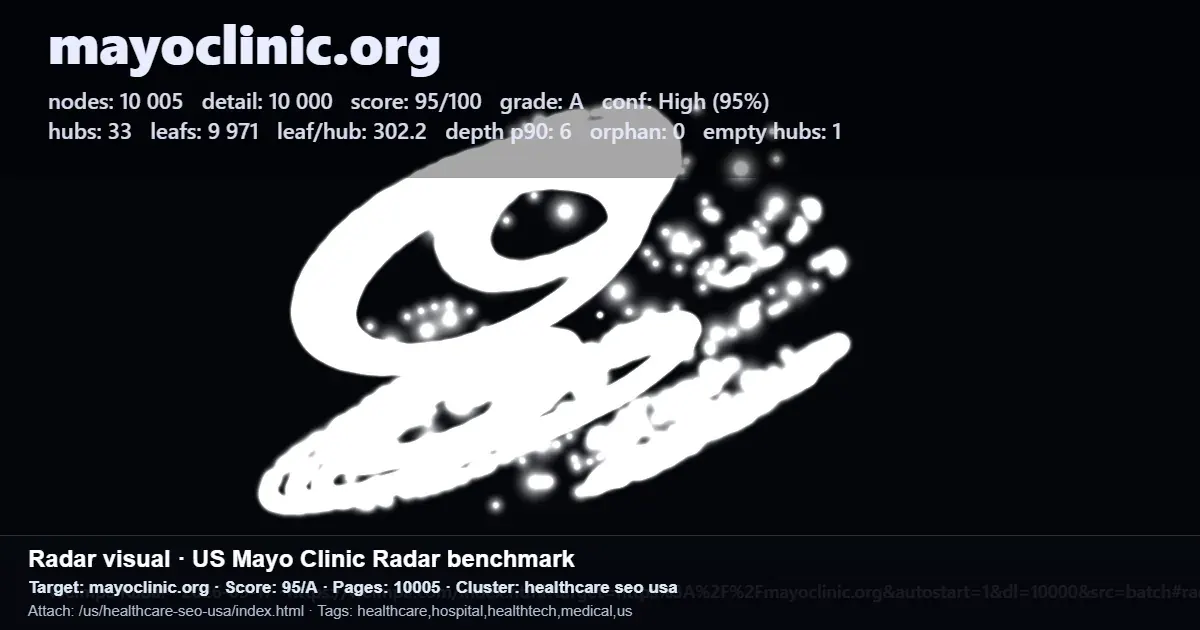
SEO/GEO Radar scans a public US website and shows how its pages, hubs, leaves, and weak spots are structured for Google and AI-powered search.
Use it to find structural issues before adding more content, including incomplete sitemap coverage, orphan pages, and weak hub-to-leaf navigation.
In brief
- Review how a public US website is organized across pages, hubs, leaves, sitemap access, robots access, and key discovery paths.
- Prioritize practical fixes such as complete sitemap coverage, orphan page cleanup, and clearer internal links from hubs to leaves.
- Use the scan as an initial diagnostic when your team needs more qualified inbound demand from Google and AI-powered search.
What to do
SEO/GEO Radar is a site structure diagnostic for public websites. It reviews the visible search layer: pages, hubs, leaves, weak spots, sitemap and robots access, homepage access, and the paths crawlers use to find important sections.
A common Radar finding is that the sitemap covers only part of the site. The practical fix is to publish a complete sitemap index, then support important hubs and leaves with clear internal navigation instead of leaving them isolated.
For US growth teams, CMOs, SEO leads, agencies, SaaS companies, marketplaces, franchise networks, and multi-location businesses, the scan helps identify what to fix first. When structural gaps appear, the next layer can include demand mapping, hub and leaf page planning, evidence-backed Q&A pages, internal linking, deployment, sitemap submission, and monitoring.
What to keep in mind
Radar is most useful when a website already has public pages that can be checked through normal discovery paths such as the homepage, internal links, sitemap, and robots access. If key sections are not visible through those paths, treat the scan as a visibility diagnostic rather than a full content audit.
The scan focuses on structure and discovery. It can show where pages, hubs, leaves, weak spots, sitemap coverage, and navigation patterns need attention, but it does not replace SEO planning or create missing pages by itself.
The goal is not to publish generic content. The goal is to build a clearer inbound layer for the US market: pages that answer real questions, can be discovered, support buying committees, and help turn search demand into qualified conversations.