
Website Structure Audit Report Template
What this page covers
Website Structure Audit Report Template
Use this website structure audit report template to document how a site is organized, including pages, hubs, leaf pages, crawl depth, orphan pages, empty hubs, and score or grade fields when available.
The template supports structured site reviews for professional services, finance, SEO agencies, SaaS platforms, marketplaces, and other sites where page counts and hub patterns vary.
In brief
- Use the report to capture the current website structure with consistent fields for pages, hubs, leaf pages, leaf-to-hub patterns, crawl depth, and scan results.
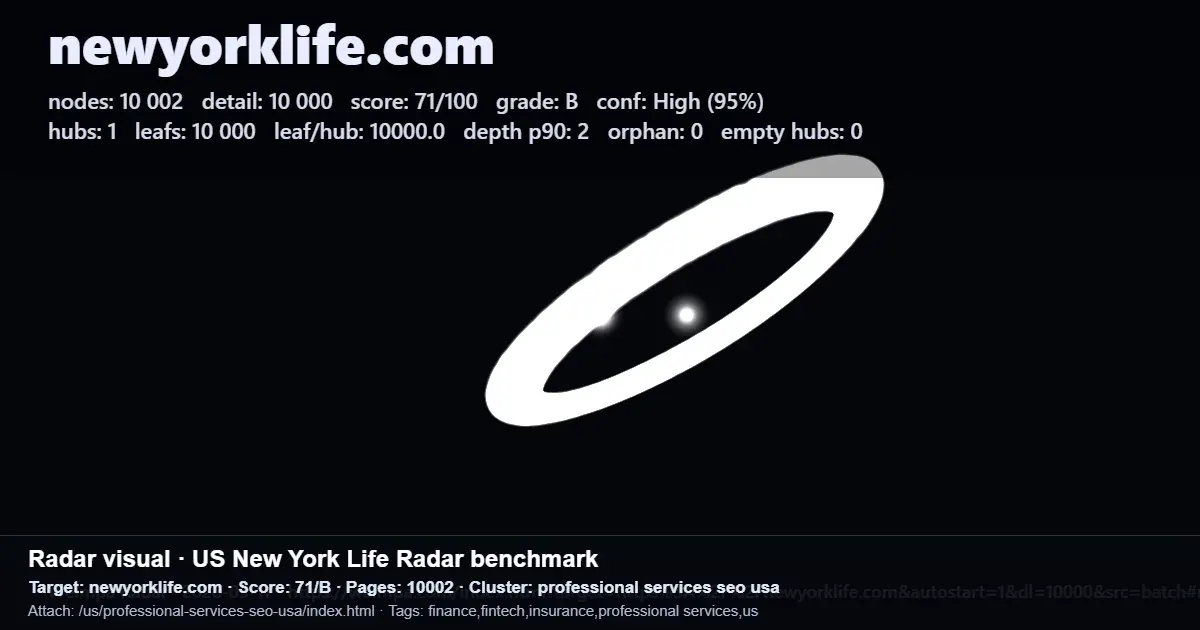
- Add benchmark context when available, including the target domain, market, cluster, tags, score, and grade, so findings are easier to compare and discuss.
- Keep the template flexible for broad website structure audits and focused reviews, including fintech SEO structure audits, SaaS sites, and platform sites.
What to do
Start the report with a compact site overview. Include the target domain, market, cluster, relevant tags, total pages, hubs, leaf pages, score, and grade when those fields are available. This gives stakeholders a shared baseline before they review specific structure findings or recommendations.
Use the findings section to document the structure signals that matter for the audited site. A smaller benchmark may show hundreds of pages, while larger examples can include thousands. The report should separate totals, hub counts, leaf counts, depth, orphan pages, and empty hubs instead of blending them into one vague summary.
Close the template with practical recommendations tied to the recorded fields. If a scan finds empty hubs, orphan pages, unusual depth, or a hub-and-leaf pattern that needs review, name the issue, identify the affected area, and leave space for the next action and a follow-up Radar scan.
What to keep in mind
A website structure audit report template is a reporting framework, not one universal standard. The examples behind this page include sites with very different page counts, including 556 pages, 5,299 pages, and 10,093 pages, so the template should work for both compact and large structures.
Context matters when reading the results. A professional services or finance site, an SEO agency site, and a SaaS or platform site may each need a different interpretation of hubs, leaf pages, and crawl depth. Keep cluster and tag context close to the numbers so the review stays fair and specific.
Use this template alongside the broader website structure audit process. For deeper work, pair it with an SEO site structure audit checklist, a technical SEO comparison, or a focused review for SaaS marketing sites and marketplace category pages.