
Website structure audit checklist for search and AI discovery
What this page covers
Website structure audit checklist for search and AI discovery
Use this checklist to see whether your public website structure is easy for Google, AI search systems, and internal teams to scan, understand, and improve.
Radar helps validate the visible URL structure for up to 1,000 pages per free demo run, depending on public sitemaps and shallow crawl signals.
In brief
- Confirm that key hubs, leaf pages, and conversion pages are visible in the public site structure, not buried or disconnected.
- Check for weak entry points, fragmented sitemaps, robots rules, and internal linking patterns that may limit discovery.
- Use the first scan to validate the structure before considering extended access, AI interpretation, comparisons, or larger pilots.
What to do
A practical website structure audit starts with the public crawlable surface. Review which pages can be found, how hubs connect to leaf pages, and whether important product, industry, location, or conversion pages sit in clear paths instead of deep inside the site.
Then compare the structure with the discovery goal. The goal is predictable discovery and measurable inquiries, not more content for its own sake. Pages should create clear entry points and make the site’s organization easy to understand.
Radar’s free demo is designed for this first structural view, with a limit of 1,000 pages per run. Extended access, larger scans, AI interpretation, two-site comparison, and JSON import for blocked or protected sites belong to later access levels.
What to keep in mind
The free demo does not include AI interpretation and does not bypass blocked or protected sites. Coverage depends on public sitemaps and shallow crawl signals, so treat it as a public-structure diagnostic, not a complete private crawl.
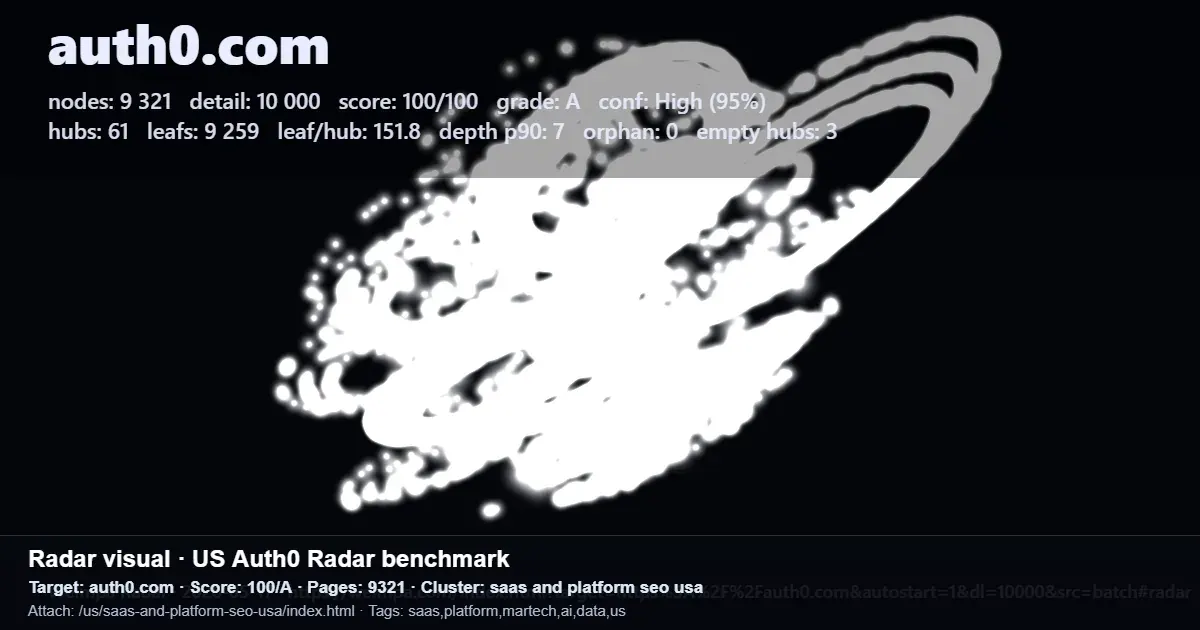
This checklist is useful when a team needs a visual way to discuss pages, hubs, weak entry points, crawlable surface, and blocked discovery paths. It is especially helpful when existing crawl exports feel like raw data to non-SEO stakeholders.
A structure audit does not guarantee search or AI visibility. It helps identify the right questions to investigate, including whether key sections are discoverable and whether internal links and public signals give search and answer engines clear paths to follow.