
Crawl Depth Reduction Plan
What this page covers
Crawl Depth Reduction Plan
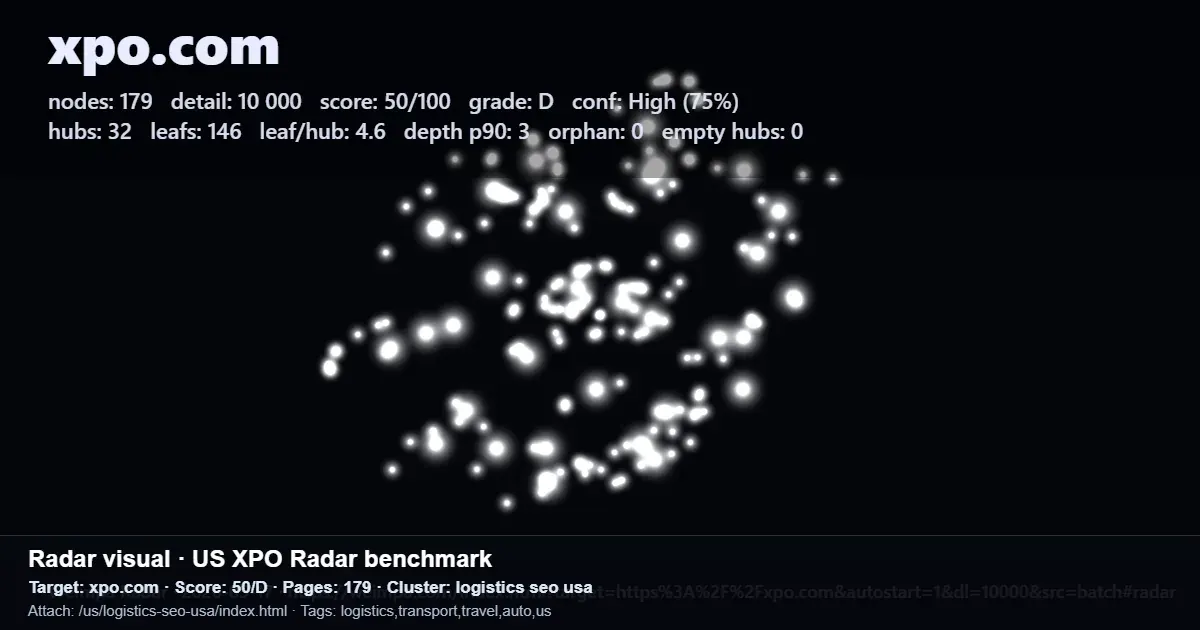
A crawl depth reduction plan uses Radar structure data to show how pages, hubs, leaf pages, and depth signals are distributed across a site.
The goal is to turn crawl structure into a practical internal linking plan, with measurable benchmarks and repeatable comparisons instead of one-off link edits.
In brief
- Start with a Radar run that shows page count, hub count, leaf count, leaf-to-hub ratio, depth indicators, orphan pages where available, and the site score or grade.
- Compare the structure with available benchmarks such as Incubeta, Metropolitan Museum of Art, Vanderbilt University, or your own prior runs to see where depth needs attention.
- Use the plan to guide internal linking updates, then review the changes with Radar features such as interpretation, comparison, and JSON import where available.
What to do
A practical crawl depth reduction plan starts with a structured scan. Radar benchmark data can summarize nodes, hubs, leaf pages, leaf-to-hub ratio, depth indicators, orphan pages, empty hubs, and an overall score or grade for the site being reviewed.
The available benchmarks show how different site structures can be. Incubeta is shown with 490 pages, 45 hubs, and 444 leaf pages. Metropolitan Museum of Art is shown with 584 pages, 79 hubs, and 504 leaf pages. Vanderbilt University is shown with 76 pages, 6 hubs, 69 leaf pages, depth p90 of 6, zero orphan pages, and zero empty hubs.
Use those measurements to decide where internal links should change. The plan should prioritize pages that matter to organic visibility, connect them through relevant hubs, and keep depth work aligned with the broader internal linking strategy.
What to keep in mind
Radar examples show that crawl structures vary widely. A site can have many leaf pages and still receive a stronger score, while a smaller site can show a lower grade and a different hub-to-leaf pattern. The plan should start from the real structure of the site being reviewed.
This work is strongest when the team can measure before and after changes. Radar plan details include 20,000 pages per run, interpretation, comparison, and JSON import, supporting larger reviews and repeated analysis over time.
Crawl depth reduction is a structural visibility task, not a ranking or traffic promise. It can help diagnose internal linking issues that may limit organic visibility, but it should be evaluated alongside content quality, technical SEO, and demand-focused page planning.